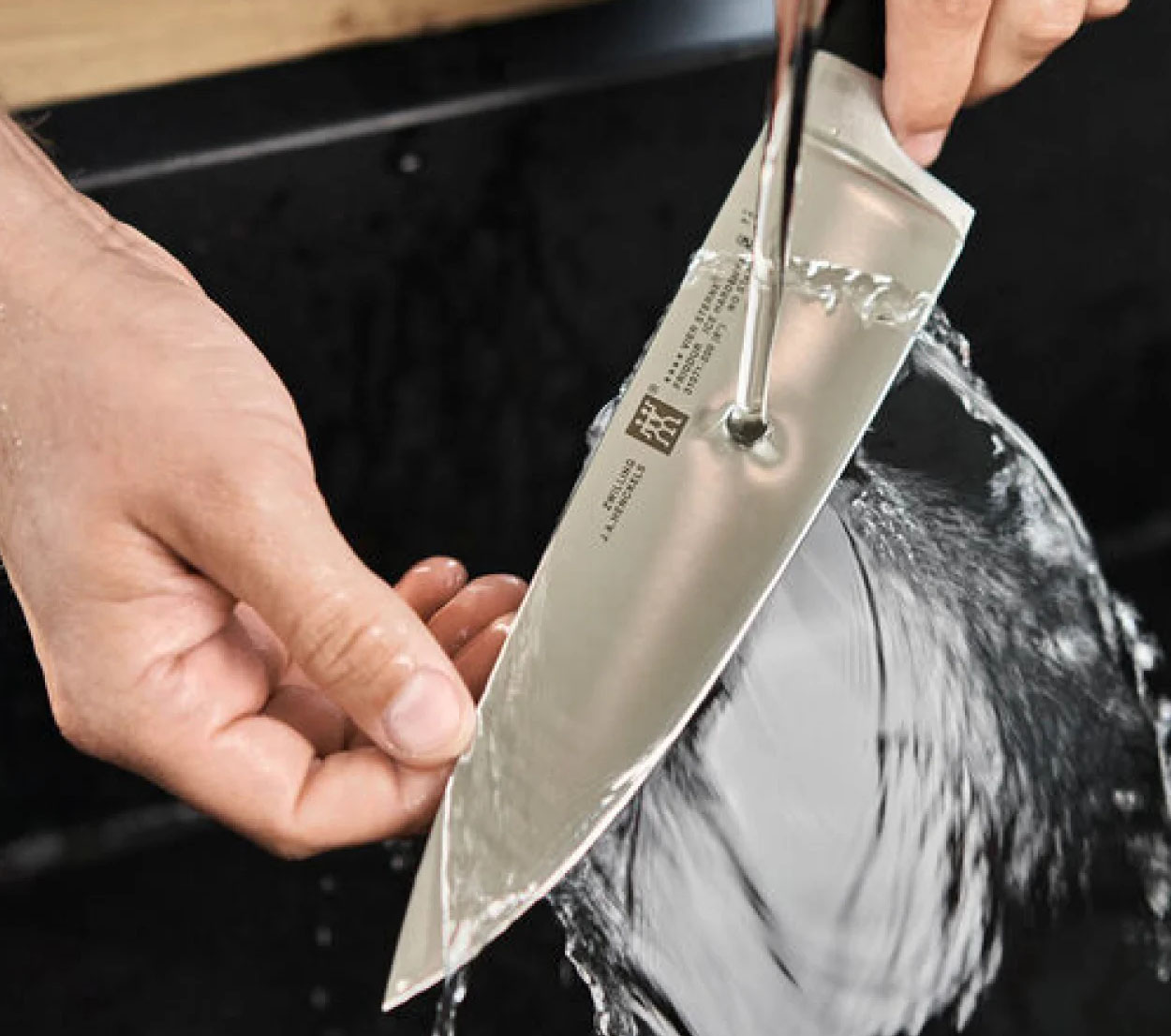
After use, wash the knife with water and a soft sponge with an adequate amount of mild detergent. Then dry it immediately with a soft clothto prevent corrosion.
Knives should always be washed by hand, not in the dishwasher. The high temperatures at which the dishwasher operates, as well as the solvents contained in the washing tablets, can damage both the blade and the handle. The damage usually does not occur suddenly, but the dishwasher accelerates the wear of the blades.
How to care for kitchen knives
Sharp knives not only make food preparation easier, but also ensure safety in the kitchen. We therefore give you useful tips on how to care for your knives properly, including washing, storing, using and, of course, sharpening.
How to care for knives: 3 essential rules
- wash them properly,
- store them safely,
- regularly bruste them.

Quality knife and dishwashing products

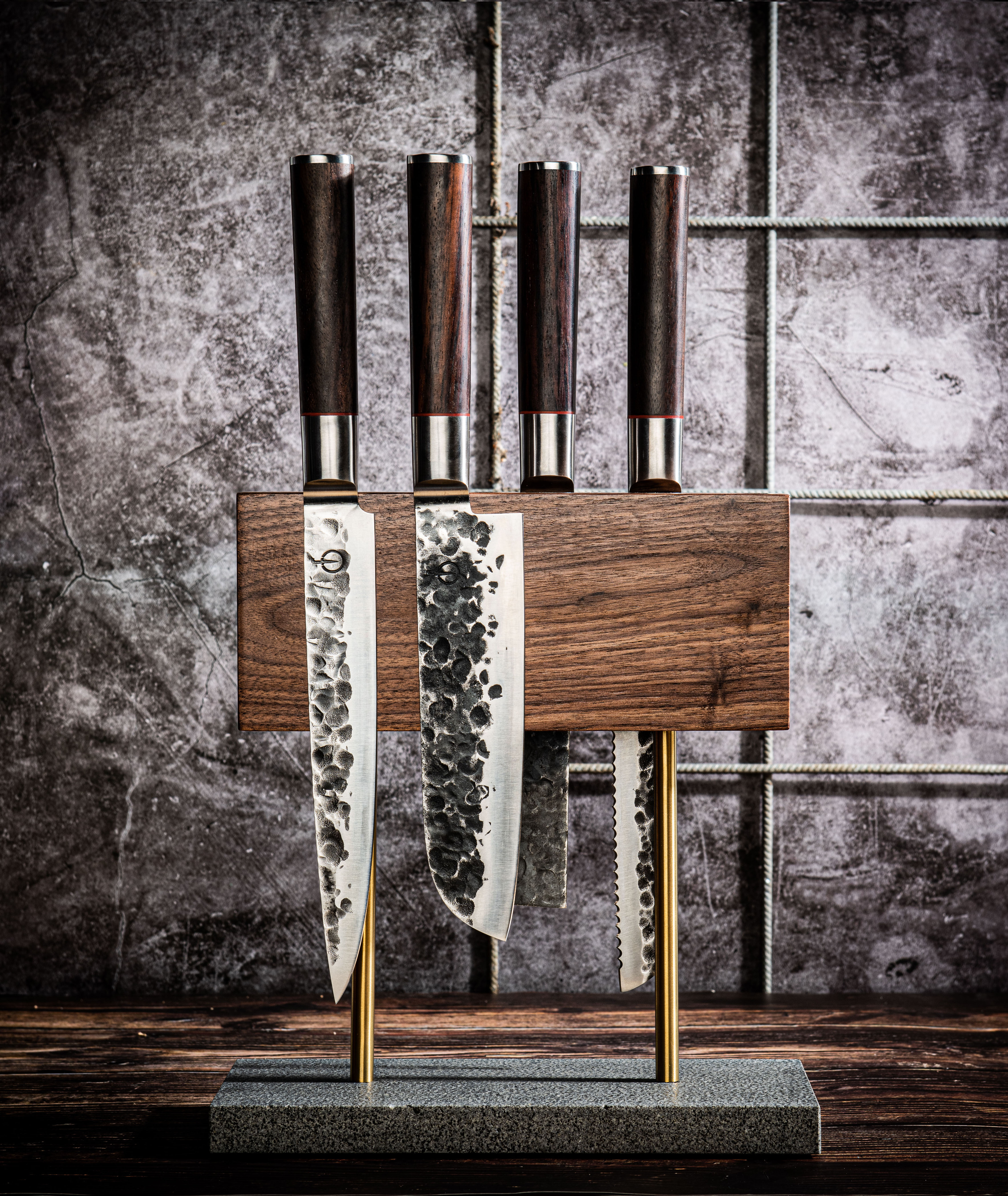
- Knife blocks and stands are easily accessible, safe and protect the blade well. However, you must take into account that they will take up some space in the kitchen.
- Magnetic rails allow quick access to knives and save space on the kitchen counter as they can be hung on the wall. However, the knives are not protected from the dust and grease that can occur in the kitchen.
- Drawer inserts or protective sleeves comes in handy if you only have room for your knives in the kitchen drawer with your other utensils or if you frequently transport them. The disadvantage of protective sheaths is the lengthy removal of knives from them.
The best knife racks according to customer reviews

- Aiming - all types of knives can be sharpened quickly and easily. At the same time, it does not sharpen too dull a blade and is more suitable for regular sharpening than actual knife sharpening.
- Brousek - sharpens the blade quickly and is suitable even for beginners. Sharpens the knife less precisely than a whetstone.
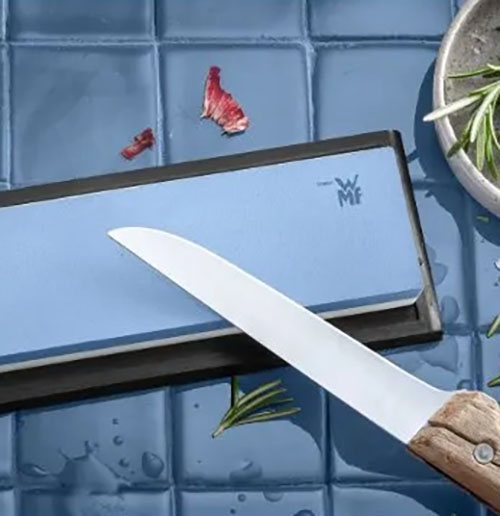
- Grinding stone - allows very precise focusing. It is suitable for sharpening all types of knives and has a long service life. Sharpening with a whetstone requires some skill and is more time consuming.
The best knife sharpeners and knife sharpeners according to customer reviews
How to use the knife correctly
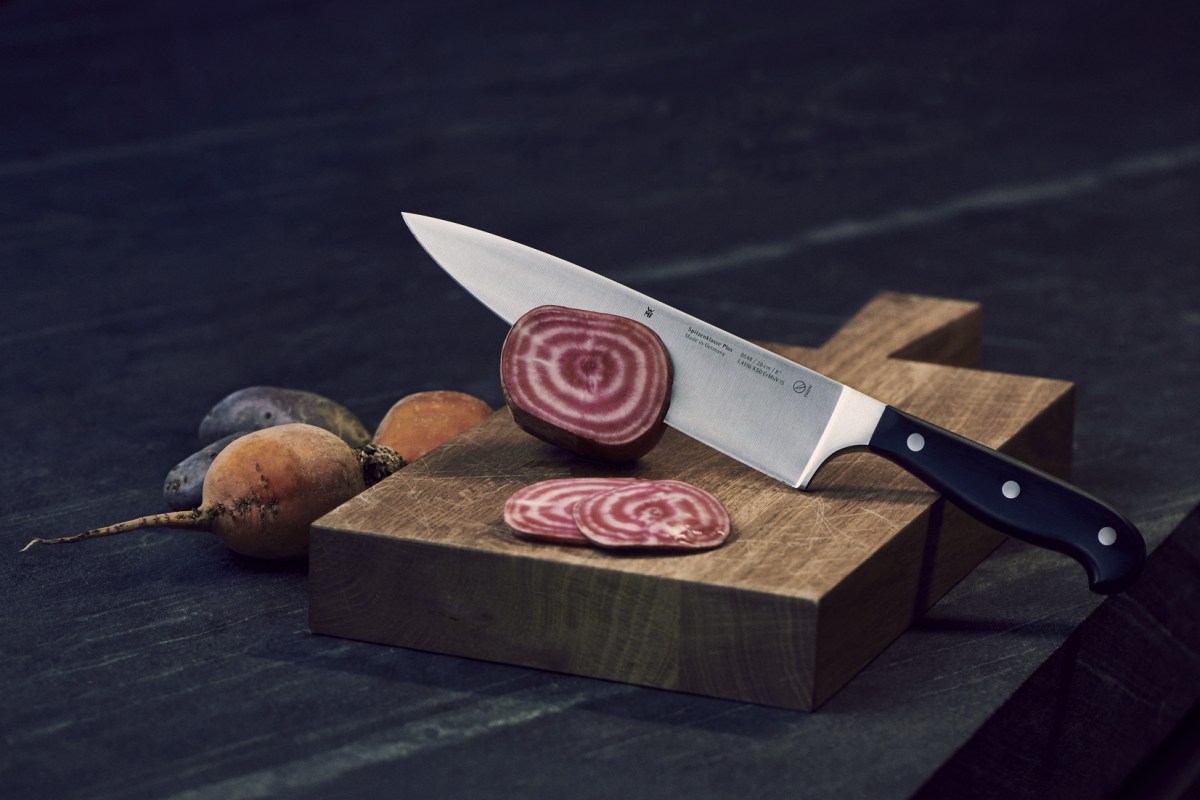
Proper use of the knives is absolutely crucial for their longevity. Slicing should only take place on suitable surfaces such as wooden or plastic cutting boards. These damage the blade only minimally.
At the same time, remember that many raw materials can damage or dull the blade. For example, citrus fruits or other acidic foods, whose acid can erode the surface of the knife. The knife should be rinsed immediately after slicing.
Regular knife maintenance
Regularly check the blades for wear and possible damage. Minor damage can be repaired by grinding, but major defects are very difficult to repair and often cannot be repaired.

When should I have my knife professionally sharpened?
Regular professional sharpening significantly extends the life of the knives. Always do it in the following cases:- If the knife is very dull and ordinary home sharpening no longer restores its sharpness.
- If the blade is visibly damaged.
- The knife cannot be sharpened evenly along the entire length of the blade by conventional sharpening.
- At least once a year even if the knife does not show any of the above conditions.