
Precise and easy cutting of meat and fish - that is the purpose for which slicing and carving knives were created. What's the difference between these tools, when to use which one and how to choose the best one from the wide range? Find out in our practical guide.
Slicing and carving knives: a guide to choosing
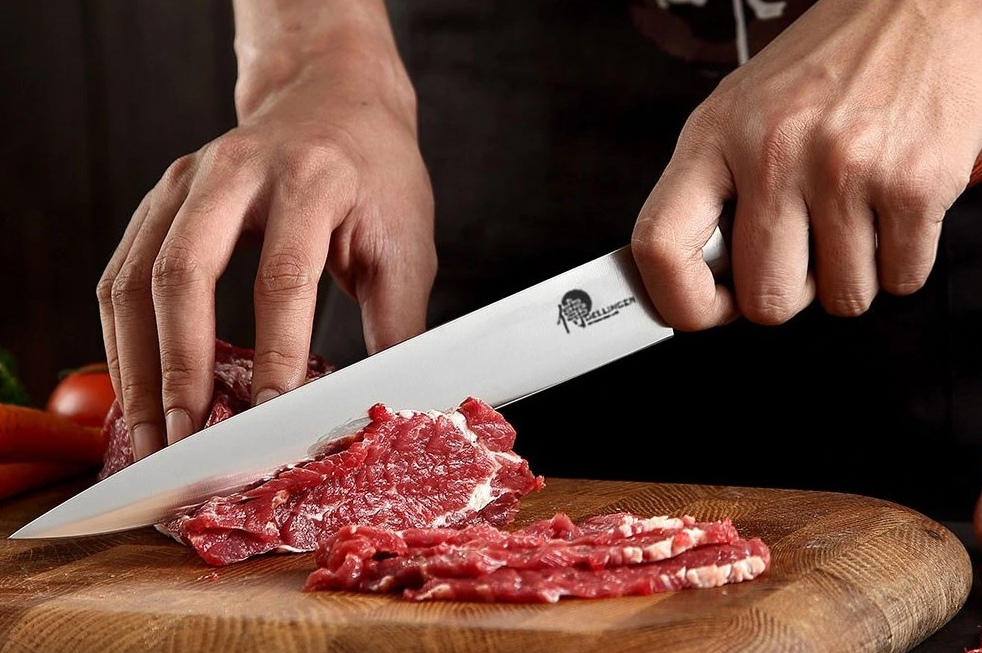
What is the difference between them?
Slicing vs. carving knife
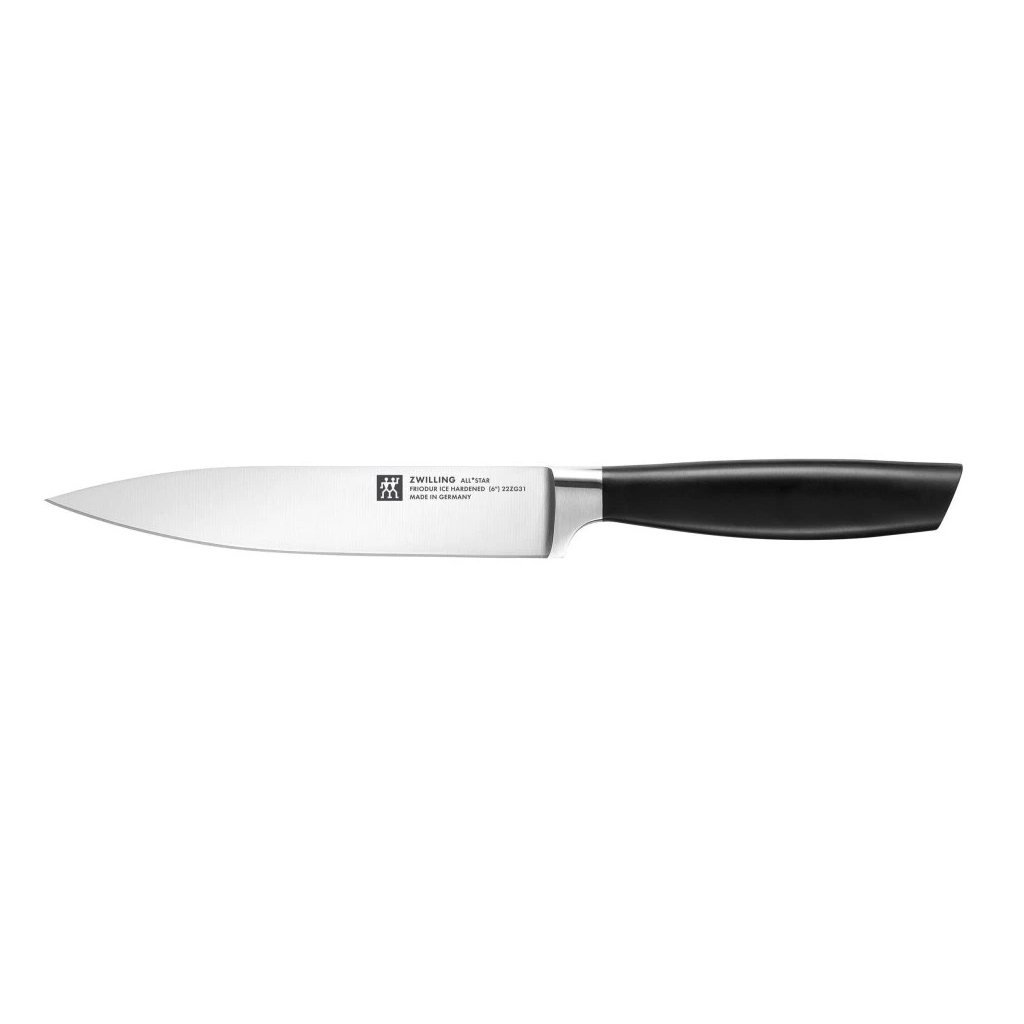
Slicing knife
- Long, thin and flexible knife with slightly rounded or straight blade.
- It is designed for precise slicing of thin slices of meat, fish or roast.
- Thanks to its thin blade, it easily passes through food without disturbing the fibres.
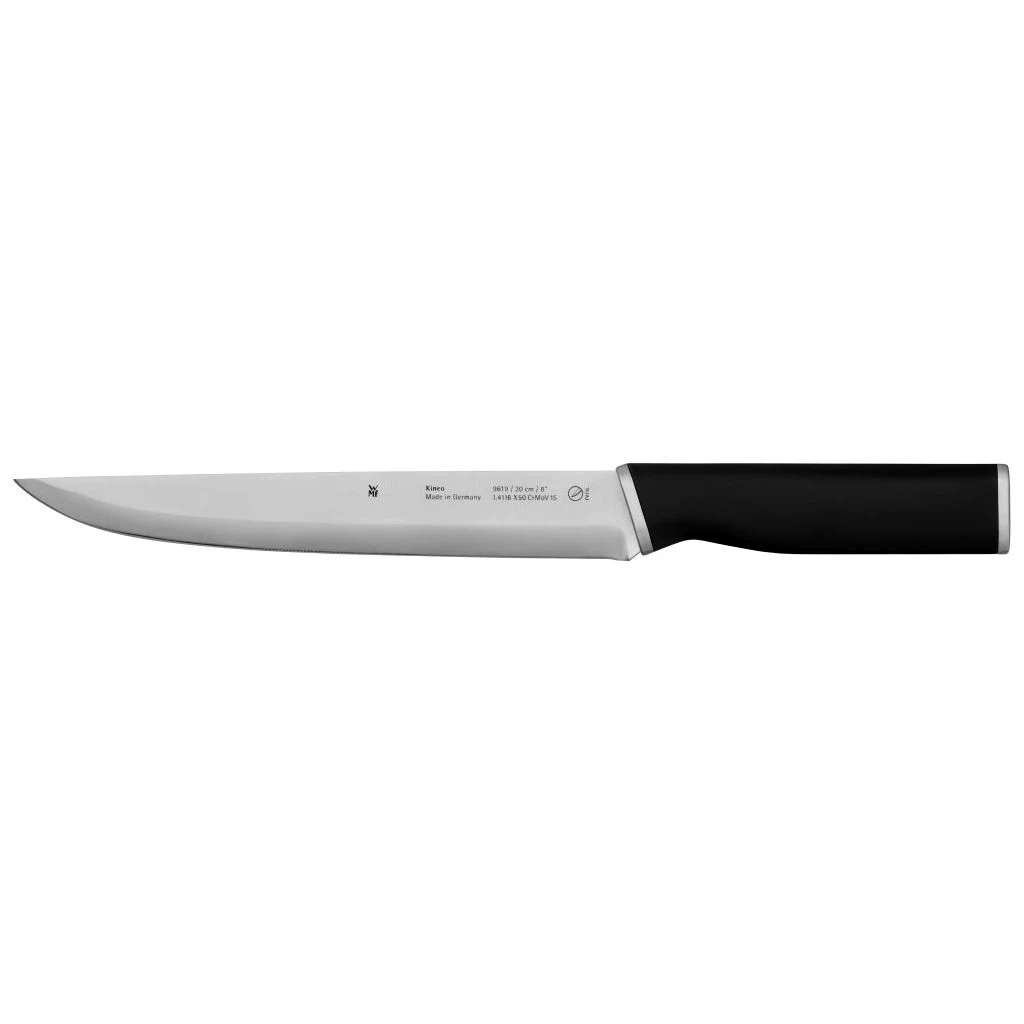
Carving knife
- More robust than a slicing knife with a fixed and often longer blade.
- Suitable for cutting larger cuts of meat such as roasts, turkeys or large fish.
- It is usually less flexible and has a more pronounced tip for easy separation of bones and joints.
Quality slicing and carving knives
What to look for when choosing?
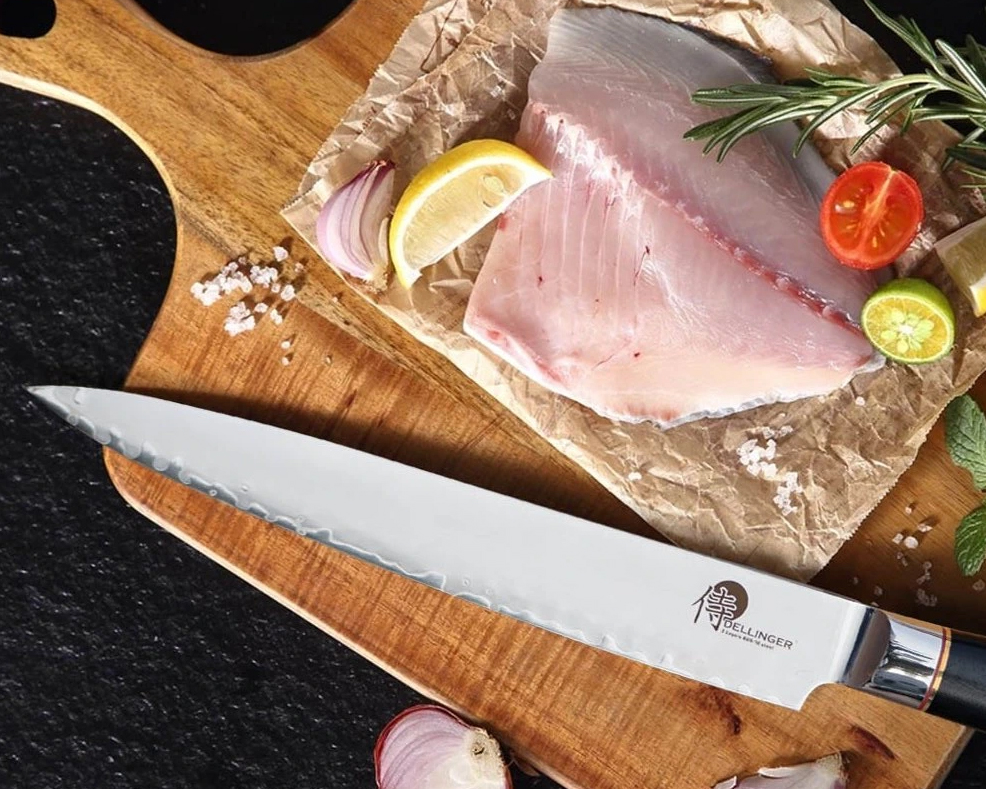
Blade length
Length plays a crucial role when cutting larger pieces of meat.
Slicing knives are most often in the range of 20-35 cm, while carving knives are around 20-30 cm. The longer the blade, the fewer strokes are needed for a perfect cut.
Blade material
Quality material means long life and easier maintenance:- Stainless steel - corrosion-resistant, easy to maintain but requires regular sanding.
- Carbon steel - holds an extremely sharp edge, but is more prone to rusting and requires more care.
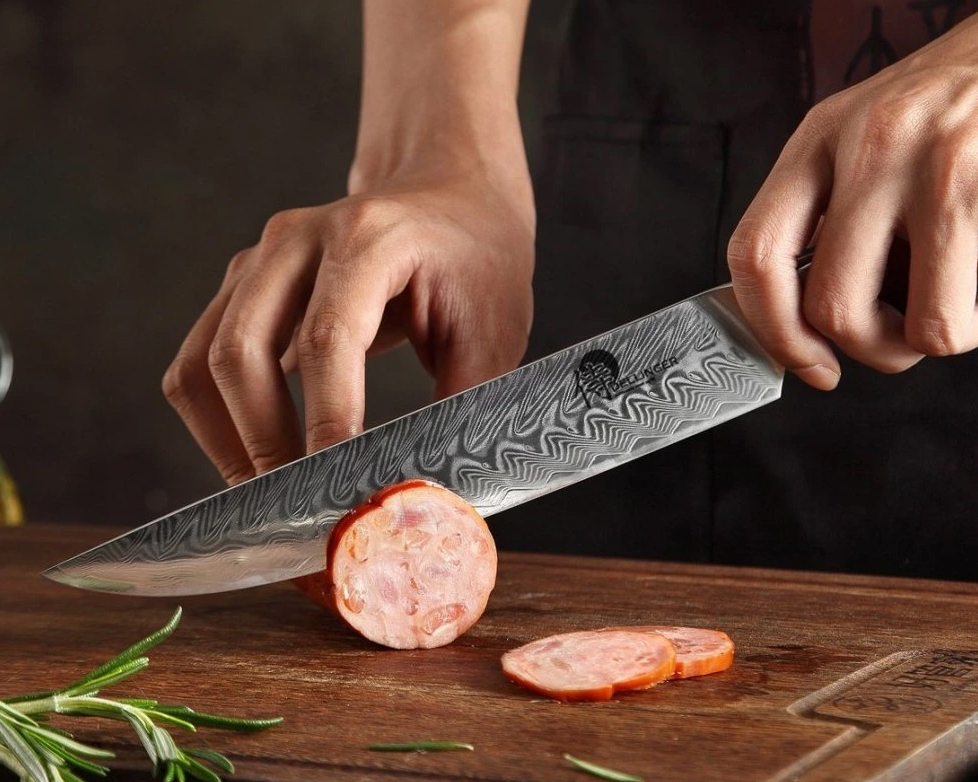
- Damascus steel - top quality, great sharpness and unique design, but also higher price.
Blade shape and thickness
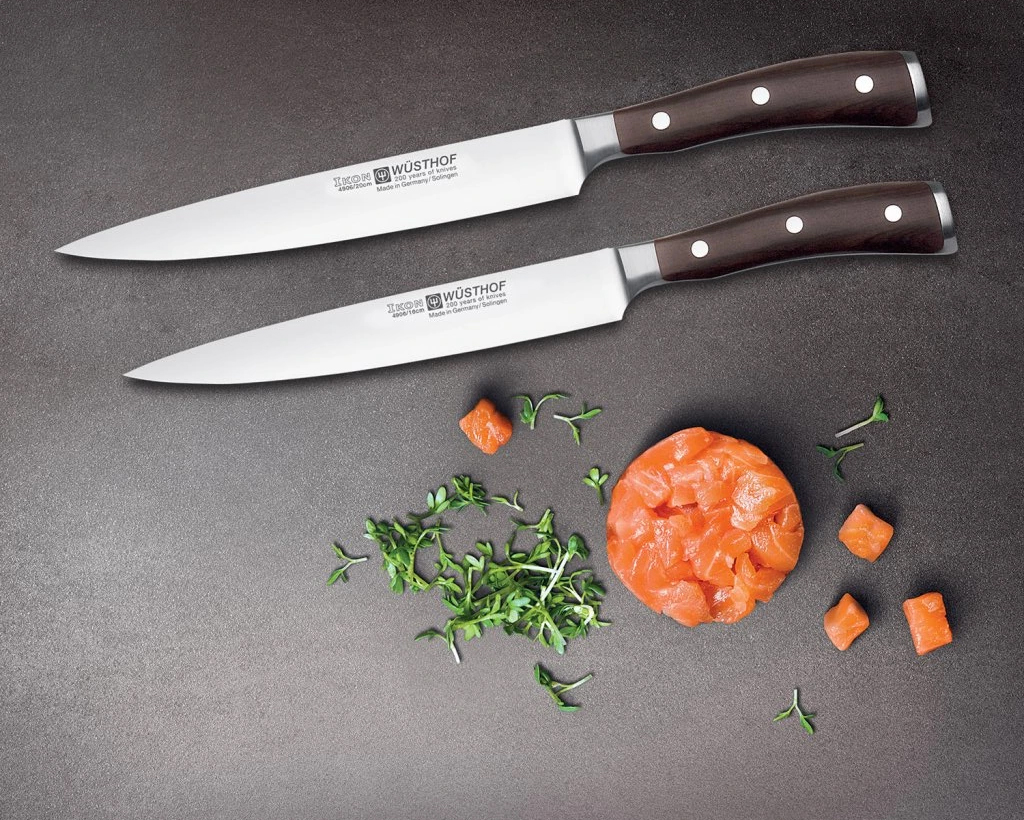
Slicing knives they have a narrower and more flexible blade, which allows precise slicing of thin slices. In addition, some slicing knives have cut-outs on the blade to reduce food adhesion and allow for smoother cutting.
Cutting knives they have a stronger and thicker blade, which helps when working with tougher cuts of meat.
Handle ergonomics
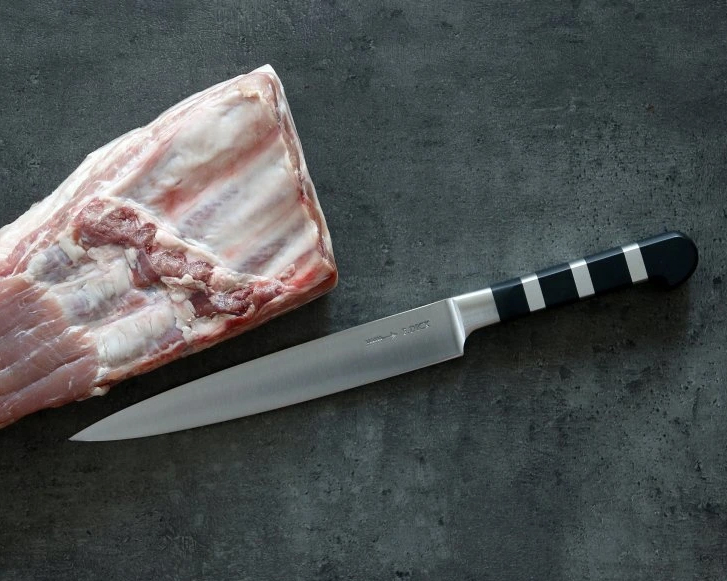
The right handle is the key to safe and comfortable work, so it should be:- Comfortable in the hand - with an ergonomic shape that allows a firm grip.
- Made of durable material - wood, composite materials or synthetics are popular.
- With non-slip surface - for safer handling, especially when working with oily raw materials.
How to properly care for a carving and slicing knife?
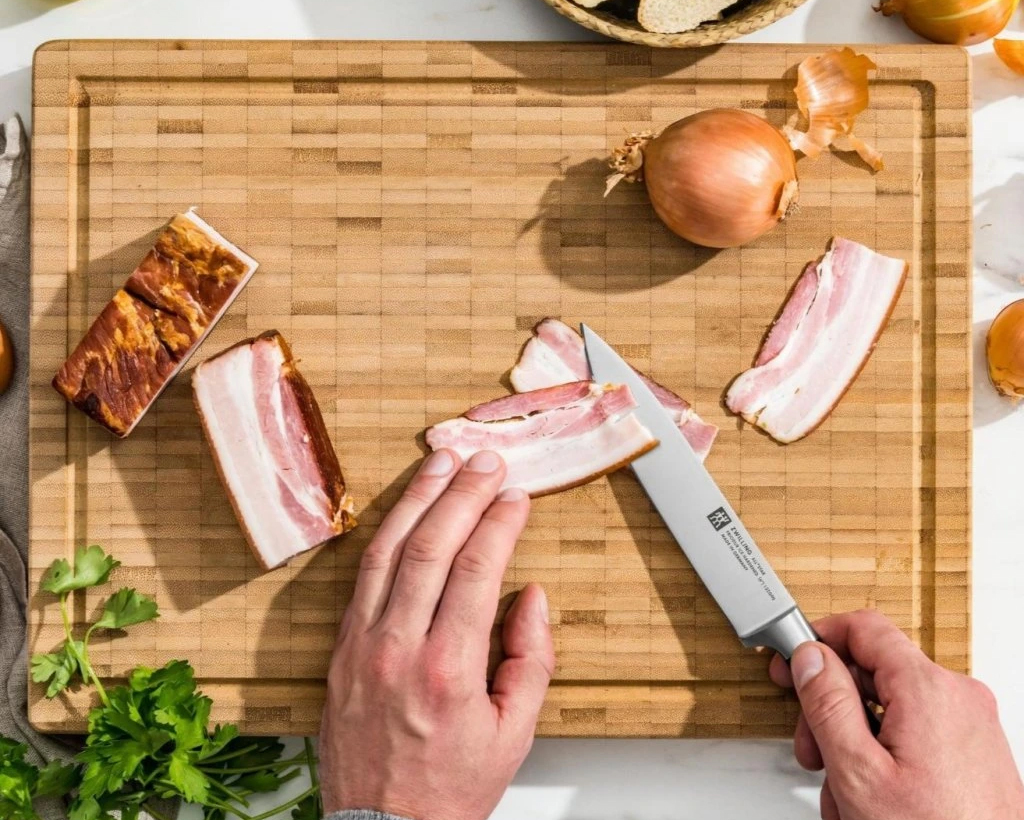
To make sure your knife lasts for many years, follow these rules:
- Washing by hand only - never put quality knives in the dishwasher, aggressive cleaners can damage the blade and handle.
- Regular grinding - keep the knife sharp with whetstone or grinding stone.
- Correct storage - store knives in a stand, on a magnetic rail or v protective case.
Our tip
Read also

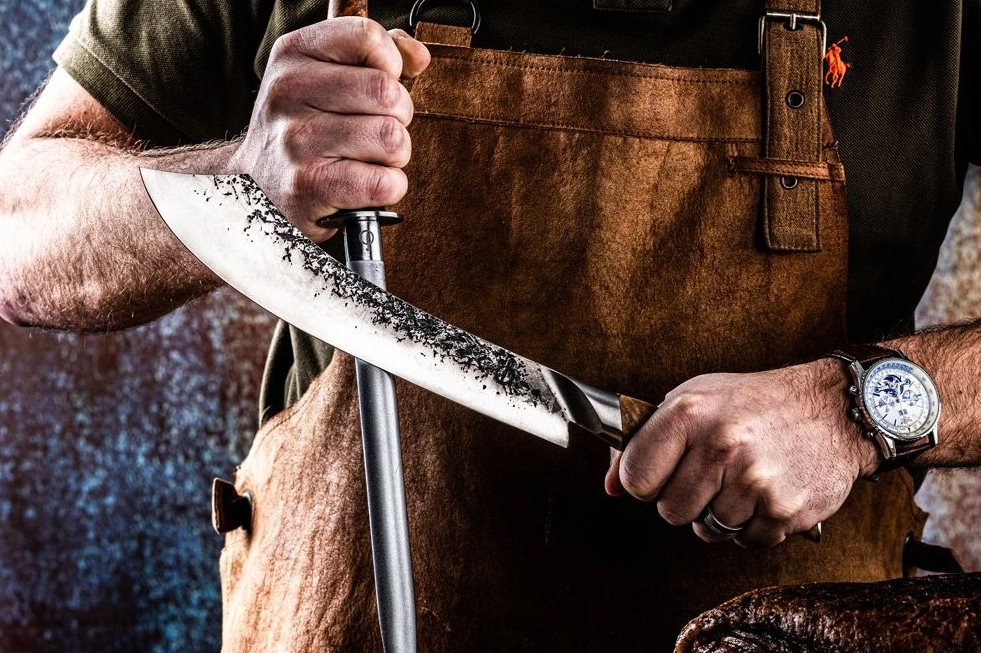
Knife sharpening instructions
Learn the correct techniques for sharpening and sharpening knives
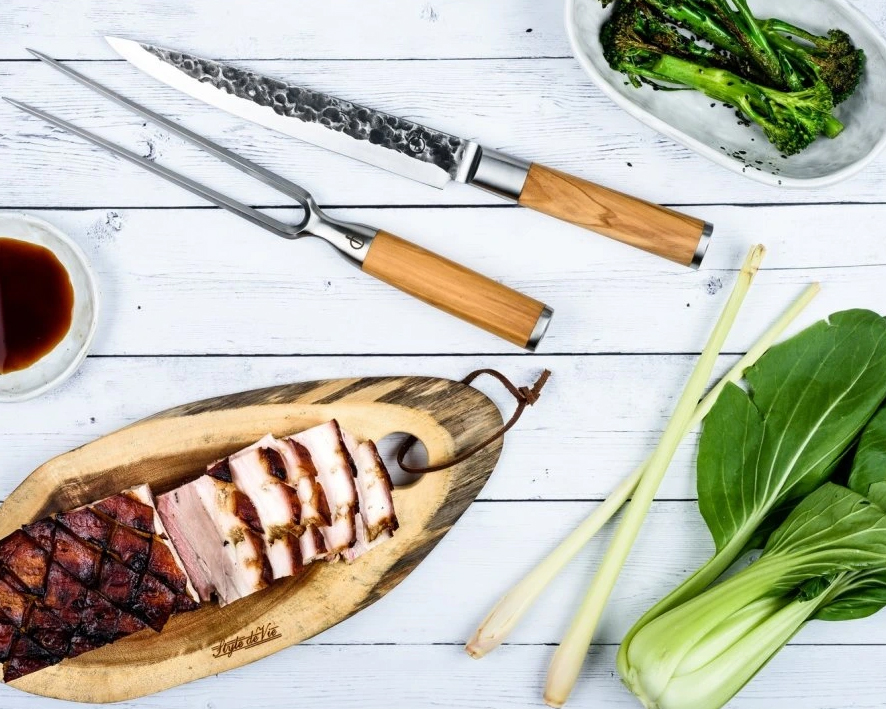
Additional equipment:
What goes with slicing knives?
Meat fork - holds the meat steady during slicing and prevents it from sliding.
Meat mallet - ideal for tenderizing meat, improving tenderness and making it easier to prepare.
Meat thermometer - allows precise temperature measurement inside the meat and ensures perfect preparation of every dish.
Favourite meat forks
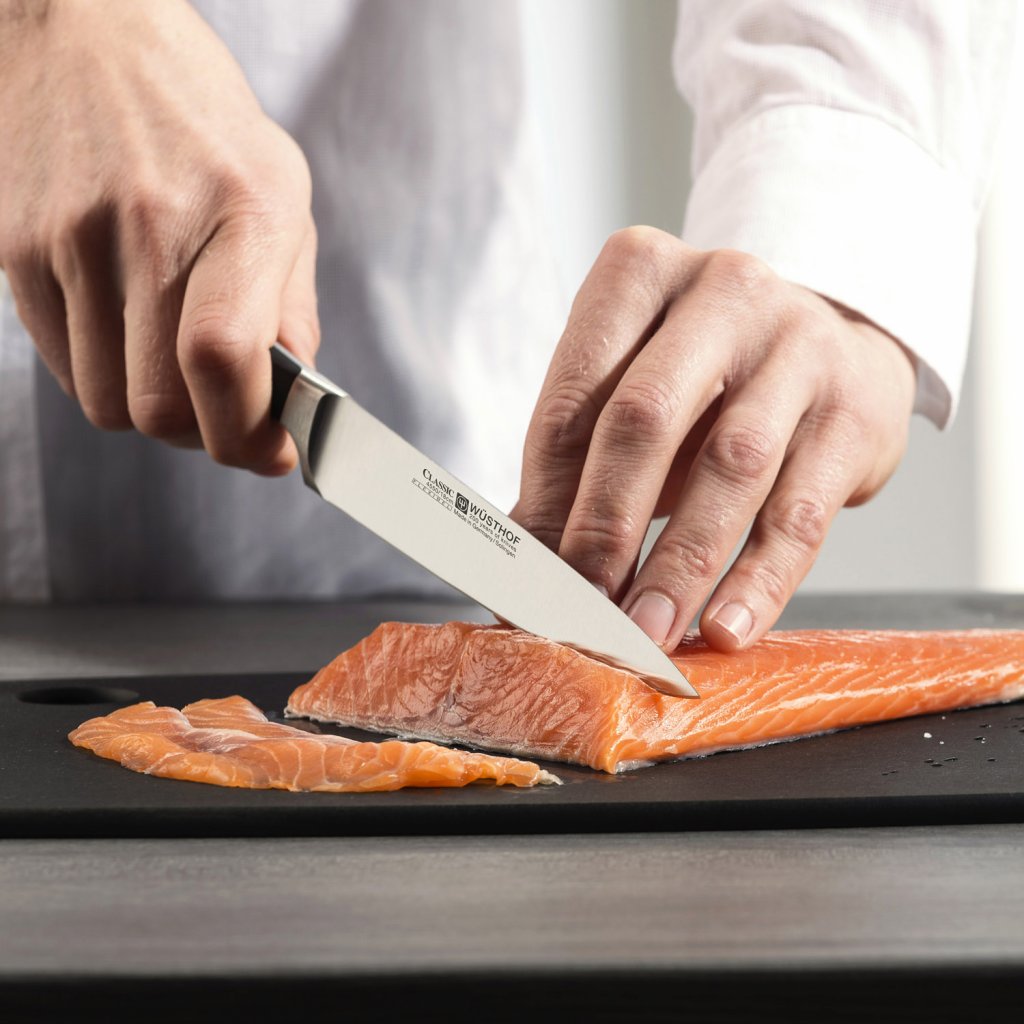
The best brands of slicing and carving knives
If you are looking for a top quality knife, it is worth betting on reputable brands that are known for their quality and precise workmanship. The best ones include Dellingerwhich excels in handmade and damascus steel, ensuring exceptional sharpness and durability. Another great choice is the Wüsthof, a traditional German brand popular among professional chefs for its perfectly balanced knives. Zwilling pak offers premium knives with excellent ergonomics, durability and a precision blade that makes everyday work in the kitchen easier.
FAQ
The most frequently asked question
How often should I sharpen my knife?
A light resharpening with a whetstone after each use and a thorough grinding with a whetstone every few months is recommended.
Is a slicing knife with cutouts on the blade better?
Yes, if you frequently cut meat or fish, the burrs help reduce the adhesion of food to the blade.
Can I use a carving knife instead of a slicing knife?
The slicing knife is less flexible and does not allow such fine slicing, but can be used in an emergency.
Which grinding angle is ideal for slicing and carving knives?
A grinding angle between 15-20 degrees is usually recommended for maximum sharpness and performance.
Which cutting board is best for knives?
Wooden or plastic cutting boards are recommended as they save the blade more than glass or ceramic options