
No waste, no slipping and no strain on your hand - that's how you work with a peeling knife. It's designed to help you perfectly prepare fruit and vegetables, but it can also handle other tasks. We'll advise you on what to look for when choosing one and how to care for it so that it serves you reliably and for a long time.
Peeling knife: indispensable for processing fruit and vegetables
3 reasons
Why get a peeling knife
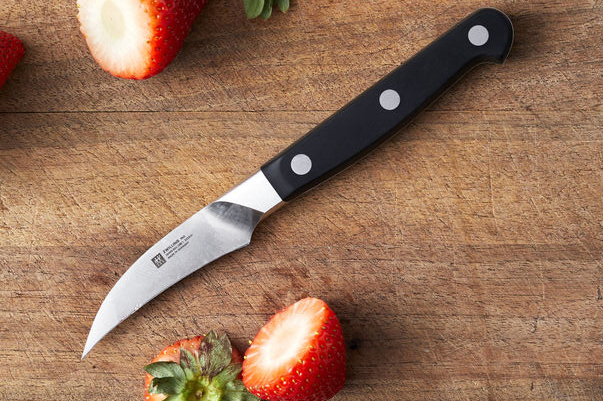
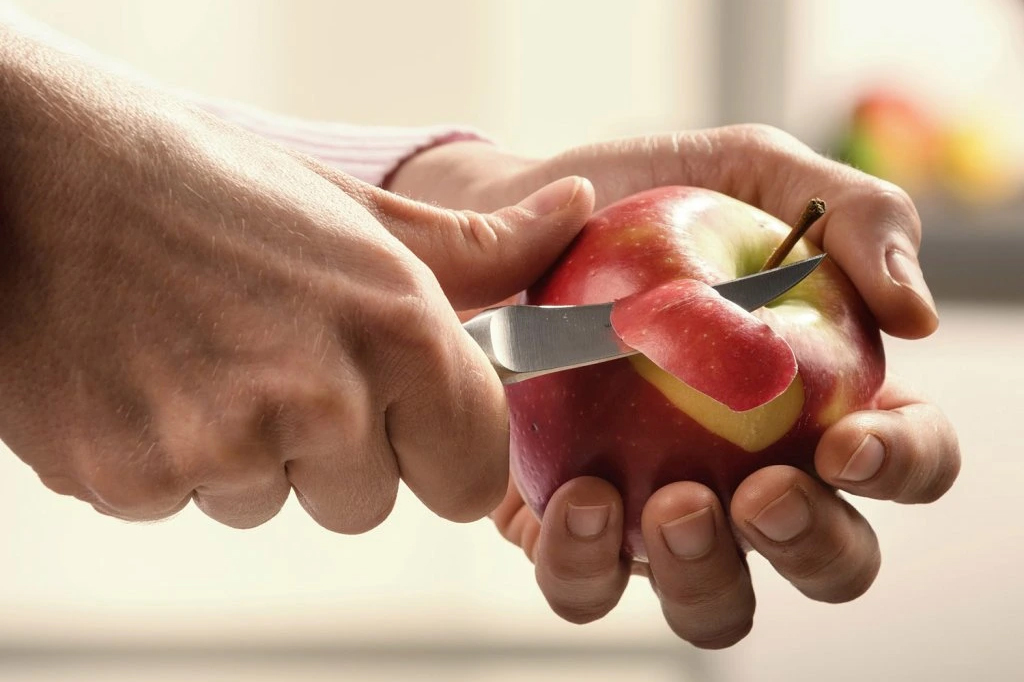
The peeling knife differs from conventional knives mainly by its specific curved blade, which adapts to the shape of the raw material. This means that you can remove the skin quickly and easily without losing too much of the flesh. Thanks to the short blade length (usually 6-8 cm), you have perfect control over the cut, which is especially crucial when working with small or irregular shapes.
- Adapts to the shape of fruit and vegetables - perfectly follows the curves of potatoes, carrots, apples or zucchini.
- Minimises waste - allows precise peeling without unnecessary removal of flesh.
- Easy handling - short blade and ergonomic handle provide excellent control over the movement of the knife.
Popular peeling knives
How to choose the right peeling knife?
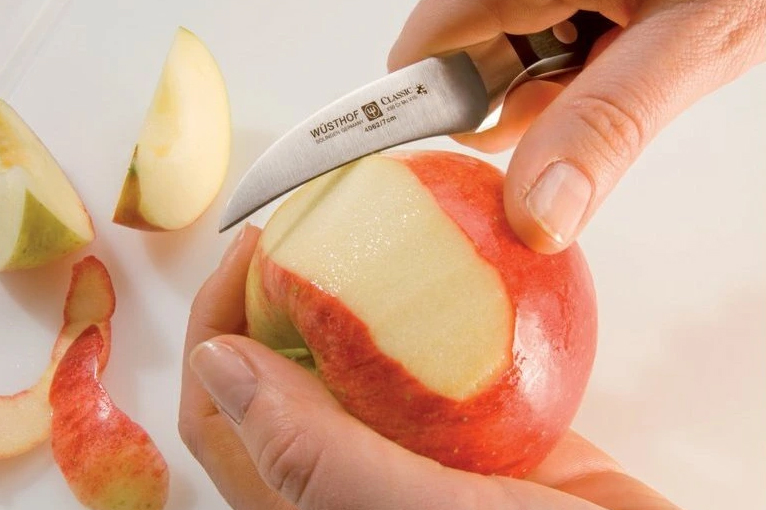
- Stainless steel - corrosion resistant, easy to sharpen and long lasting.
- Carbon steel - holds a great edge, but requires regular care to keep it from rusting.
- Ceramic - extremely sharp and light, but fragile and susceptible to damage.
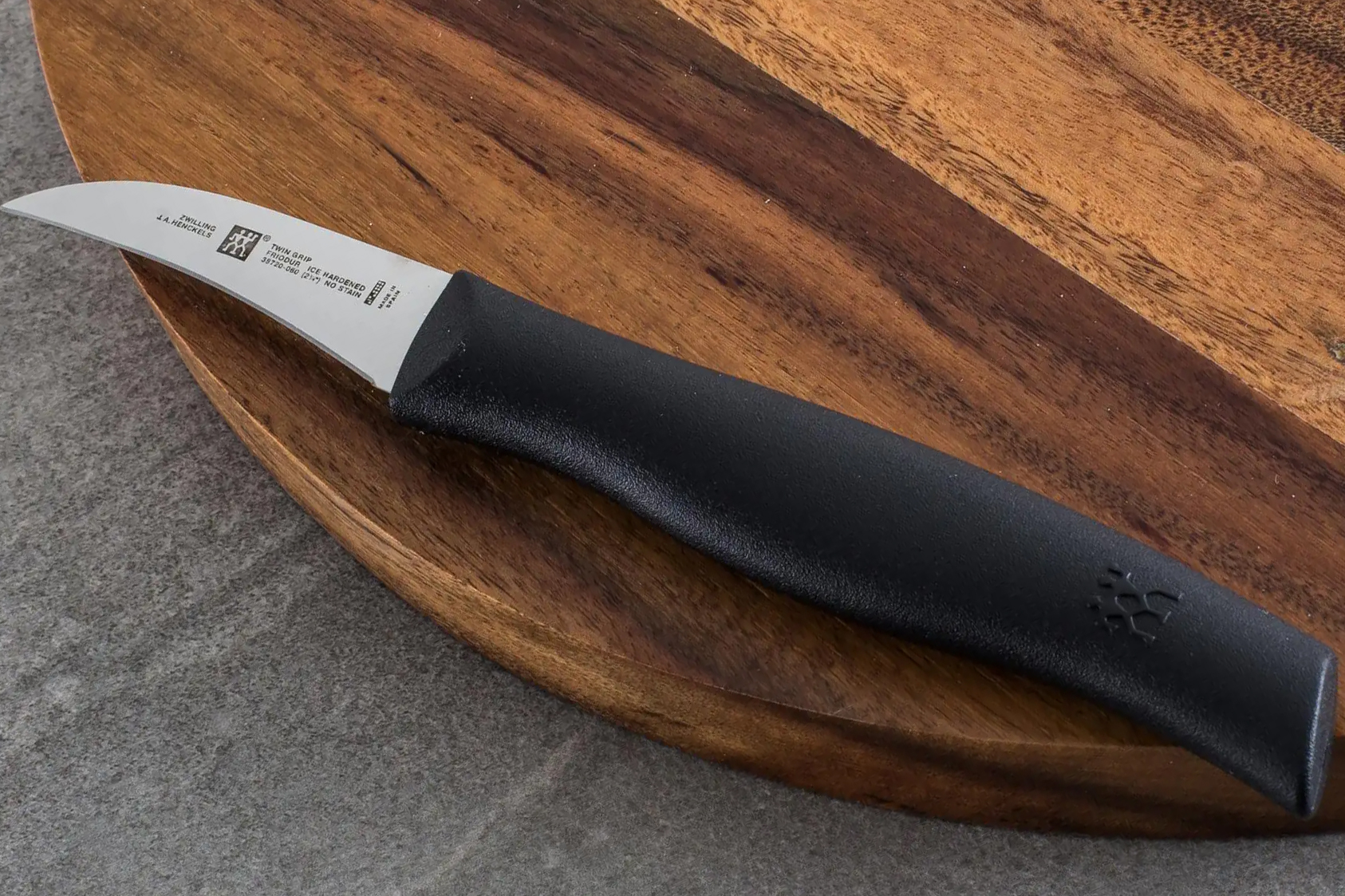
Ergonomic handle
The handle should fit comfortably in the hand and allow a firm grip even when working with wet ingredients. Different materials are available:- Wood - aesthetic, pleasant to the touch, but requires regular maintenance.
- Plastic - easy to maintain and often has a non-slip finish.
- Combination materials - for example, synthetic handles with soft elements for a more comfortable grip.
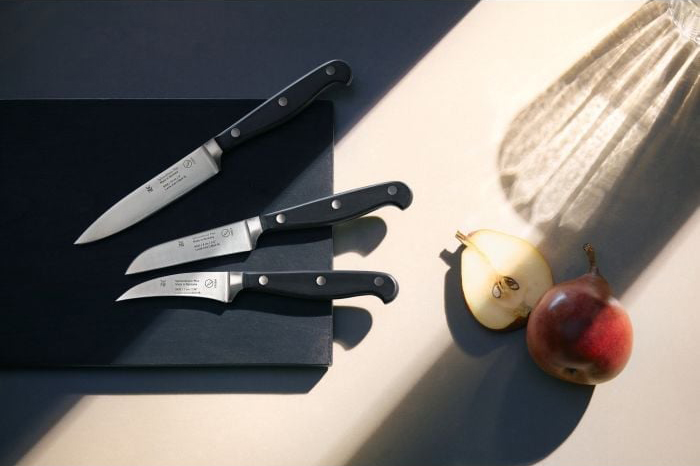
The curvier the blade, the better it adapts to rounded raw materials. Professional models sometimes have a serrated edge for more efficient peeling.
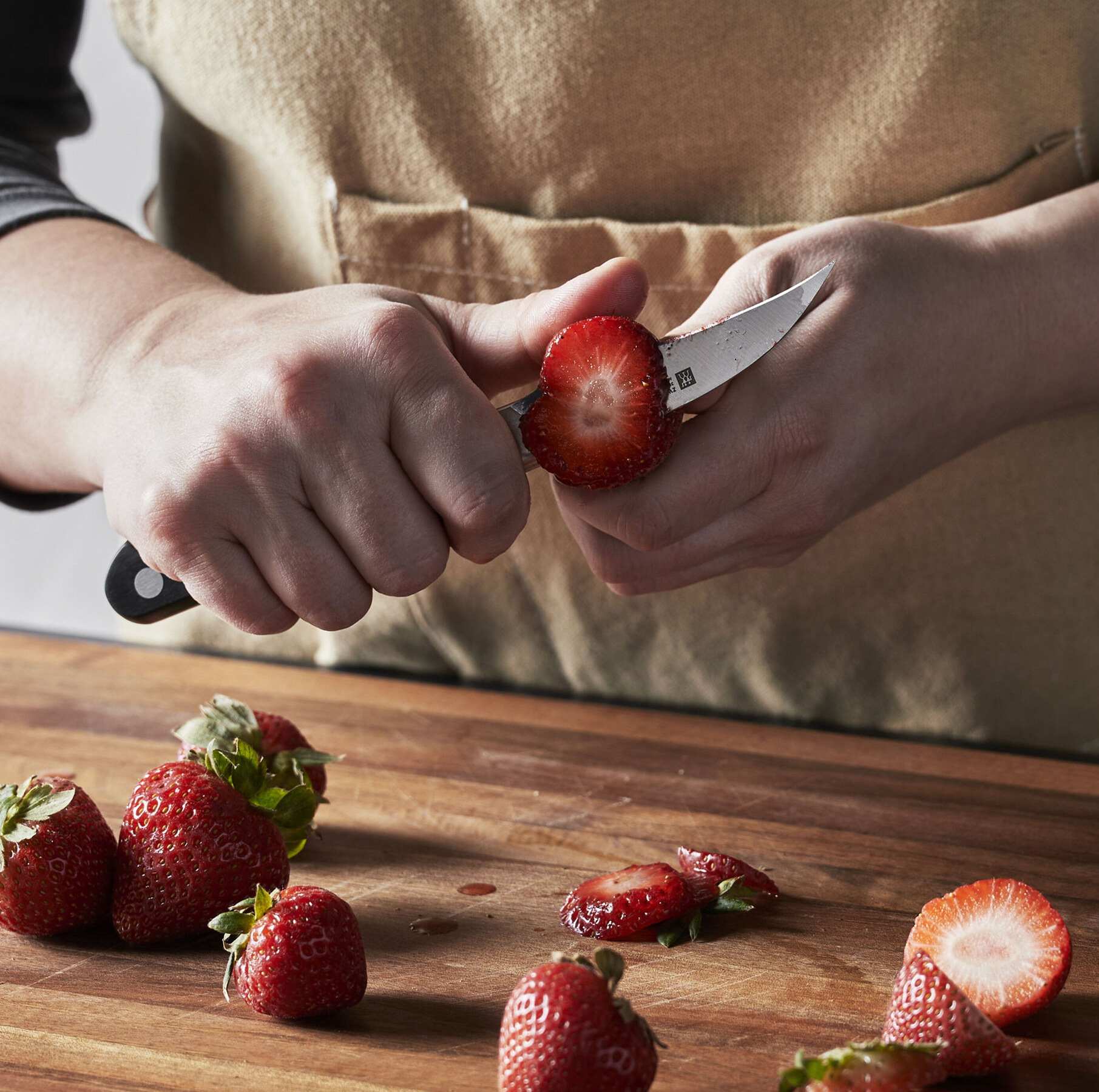
What is a peeling knife good for?
- Peeling round vegetables - potatoes, beets, turnips or zucchini will go quickly and accurately with the peeling knife.
- Shaping of raw materials - thanks to the curved blade, you can easily create decorative vegetable shapes or precisely process raw materials for professional-looking dishes.
- Cutting out imperfections - the peeling knife is also great for removing blemishes, sprouts from potatoes or bruises from fruit.
- Spicing of meat - The fine, precise blade is ideal for preparing meat in which you want to incorporate garlic, herbs or bacon.
Our tip
Read also

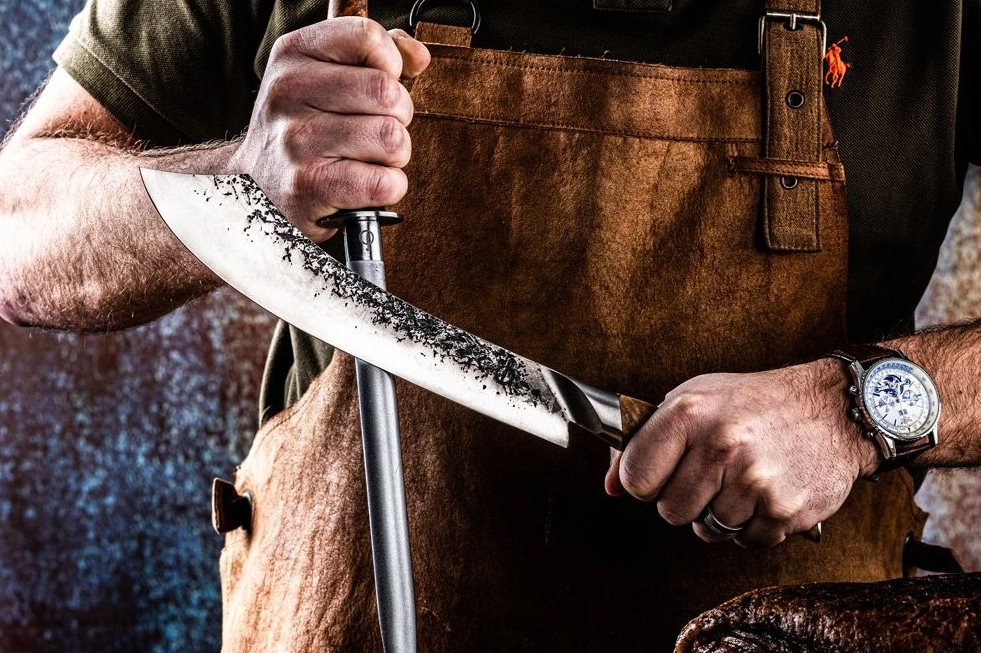
Knife sharpening instructions
Learn the correct techniques for sharpening and sharpening knives.
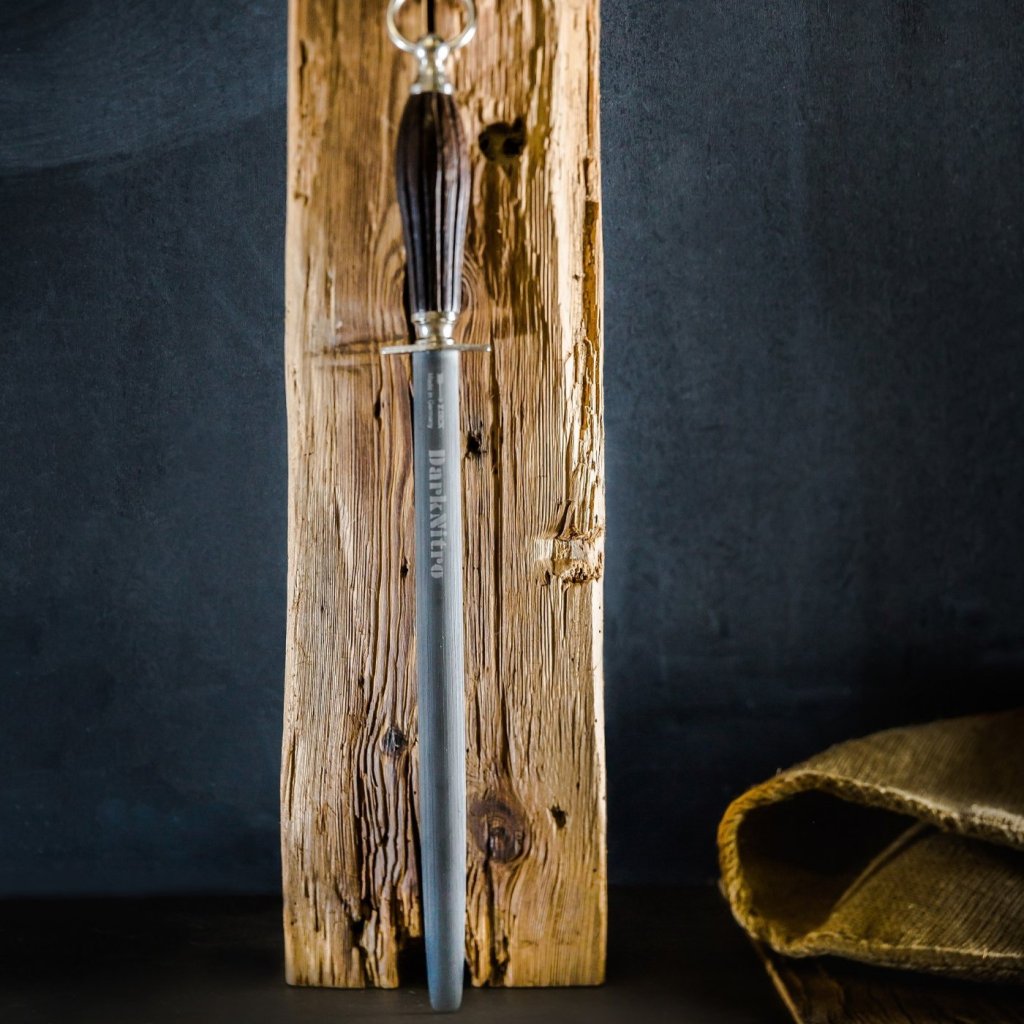
5 steps
How to care for your peeling knife so it lasts a long time
Since the peeling knife comes into contact with liquids from fruit and vegetables, which contribute significantly to corrosion, it must be given proper care:
- Rinse the knife under running water after each use
- Dry the knife immediately with a soft cloth.
- Unless otherwise stated by the manufacturer, avoid washing in a dishwasher - aggressive detergents and high temperatures can damage the blade and handle.
- Regular grinding is key to keeping the blade sharp.
- also plays an important roleproper storage - ideally store the knife in a block, on a magnetic bar or with a protective sheath to avoid dulling the blade when in contact with other tools.
The most popular whetstones and sharpeners according to our customers' reviews
FAQ
The most frequently asked question
How to choose the right peeling knife?
Aim for a short and curved blade (usually 6-8 cm) that follows the shape of the fruit and vegetables well. An ergonomic grip is important to ensure comfortable and safe handling. Choose a quality material - stainless steel or carbon steel for long life and easy sharpening.
What are the differences between a peeling knife and a paring knife?
Vivamus ac leo pretium faucibus. Nam quis nulla. Integer in sapien. Proin in tellus sit amet nibh dignissim sagittis. Nullam sit amet magna in magna gravida vehicula. Curabitur ligula sapien, pulvinar a vestibulum quis, facilisis vel sapien. Duis viverra diam non justo. Aliquam ante. Duis risus. Pellentesque ipsum. Quisque porta. In convallis. Duis pulvinar. Nullam eget nisl.
How to use a peeling knife correctly?
Vivamus ac leo pretium faucibus. Nam quis nulla. Integer in sapien. Proin in tellus sit amet nibh dignissim sagittis. Nullam sit amet magna in magna gravida vehicula. Curabitur ligula sapien, pulvinar a vestibulum quis, facilisis vel sapien. Duis viverra diam non justo. Aliquam ante. Duis risus. Pellentesque ipsum. Quisque porta. In convallis. Duis pulvinar. Nullam eget nisl.
How do I care for my peeling knife and keep it sharp?
Vivamus ac leo pretium faucibus. Nam quis nulla. Integer in sapien. Proin in tellus sit amet nibh dignissim sagittis. Nullam sit amet magna in magna gravida vehicula. Curabitur ligula sapien, pulvinar a vestibulum quis, facilisis vel sapien. Duis viverra diam non justo. Aliquam ante. Duis risus. Pellentesque ipsum. Quisque porta. In convallis. Duis pulvinar. Nullam eget nisl.
Which brands offer the best peeling knives?
Vivamus ac leo pretium faucibus. Nam quis nulla. Integer in sapien. Proin in tellus sit amet nibh dignissim sagittis. Nullam sit amet magna in magna gravida vehicula. Curabitur ligula sapien, pulvinar a vestibulum quis, facilisis vel sapien. Duis viverra diam non justo. Aliquam ante. Duis risus. Pellentesque ipsum. Quisque porta. In convallis. Duis pulvinar. Nullam eget nisl.