Customer support:info@kulina.ie

Steel knives: sharpness that is second to none

ocelove noze

If you are considering buying a quality knife, you are deciding between a knife from Stainless, damascus or carbon steel. Carbon steel knives will win you over with their extreme sharpness and durability, but they do require a little more care than their stainless steel counterparts. Let us help you choose the right one.

Who is a carbon steel knife suitable for?

For anyone looking for knifethat is uncompromisingly sharp and easy to keep in perfect shape. It will be especially appreciated by those who take cooking seriously - from professional chefs to enthusiastic home gourmets who don't mind a little extra aftercare.
Quality knives
noze z uhlikove oceli
What is carbon steel?

It is a type of steel that contains a higher proportion of carbon (usually between 0.6% and 2%). It is carbon that is the key element that gives this steel its hardness and sharpness, making it an ideal material for knife making.

Unlike stainless steel does not contain chrome, which means it is not corrosion resistant and therefore requires regular maintenance - for example, thorough drying after each use and occasional oil treatment.

Compared to damascene steelMade up of layers of different types of steel, carbon steel has a simpler structure, but what professional chefs appreciate about it is its ability to keep the blade sharp for a long time, as well as the ability to easily resharpen it while working.


Popular carbon steel knives


Which knives are better - steel, stainless steel or damascus?
nuz ocel
nuz nerez
damaškové nože
Material
Carbon steel - an alloy of iron and carbon with a minimum content of other elements.
Stainless steel - an alloy of iron, carbon, chromium and often other elements such as molybdenum or vanadium.
Damascene steel - a multi-layered steel that is formed by stacking and forge welding of different types of steel.
Sharpness
They are extremely hard, allowing for an extremely sharp and fine edge that is ideal for precision work.
They are not as hard, but still offer good sharpness and versatility.
They combine a hard core with softer layers of steel, allowing for high sharpness and durability.
Washing
After use, the knife must be washed by hand, dried thoroughly and oiled occasionally to prevent rusting.
They are corrosion-resistant and just need to be washed and dried by hand. Some models are dishwasher safe.
Care is similar to steel knives - hand washing, drying and regular sharpening.
Grinding
It is easy to sharpen and the blade can be quickly renewed.
The blade is harder to sharpen than carbon steel, and doesn't stay sharp as long.
They are usually well ground, but it depends on the type of steel used in the core.
Resilience
The blade is harder but more fragile, so it is not suitable for cutting bone or hard materials.
Resistant to moisture and acids, the blade is less brittle, so stainless steel blades can handle rougher work.
The layering makes the knives strong, durable and flexible, reducing the risk of breakage.
Price
Medium
Lower to medium
Higher
Evaluation
It is suitable for professionals and enthusiasts who appreciate maximum sharpness and do not mind higher maintenance requirements.
Stainless steel knives are suitable for everyday cooking in households and professional kitchens, where easy maintenance and reliability are a priority.
Damascene knives are ideal for those looking for a combination of functionality, performance and perfect design.

noze ocel uhlikova
3 reasons
Why steel knives are exceptional
  1. Perfect sharpnesst
    The carbon steel is hard, allowing you to create an extra-fine blade that produces precise and smooth cuts, whether you're slicing meat, vegetables or delicate herbs.
  2. Easy grinding
    Unlike other materials, carbon steel is easy to grind, even at home with a classic sharpening stone or whetstone. Thanks to this, you can quickly renew the blade and keep it in perfect condition at all times.
  3. Unique patina
    Carbon steel knives develop a characteristic patina over time that is not only aesthetic but also protects the blade from corrosion. Each knife thus acquires a unique look that tells the story of its use.
Favourite knives
Our tip
Read also
->
kvalitní nože
When it pays to invest in quality knives
We'll tell you which kitchen knives are worth investing in and which ones you can save money on.
brouseni noze
How to care for a steel knife?
As we've already said, carbon steel requires a little more attention than other materials, but with the right care it will last you for years in perfect condition. That's why:
  • After each use it is important to wash the knife by hand in warm water, wipe gently with a sponge and dry immediately.clothto prevent rust.
  • Regularly treat the blade with a thin layer of cooking oil to form a protective film against moisture.
  • To preserve the edge, it is ideal to sharpen the knife with a whetstone or whetstone and always cut on a wooden or plastic plank.
  • Remember that hard surfaces such as glass or metal can damage the blade.
  • Proper storage in knife block or on a magnetic holder then protects the blade from dulling or scratching.
Extend the life of your knife

Top sharpeners and grinders


Image

What are the best steel knives?

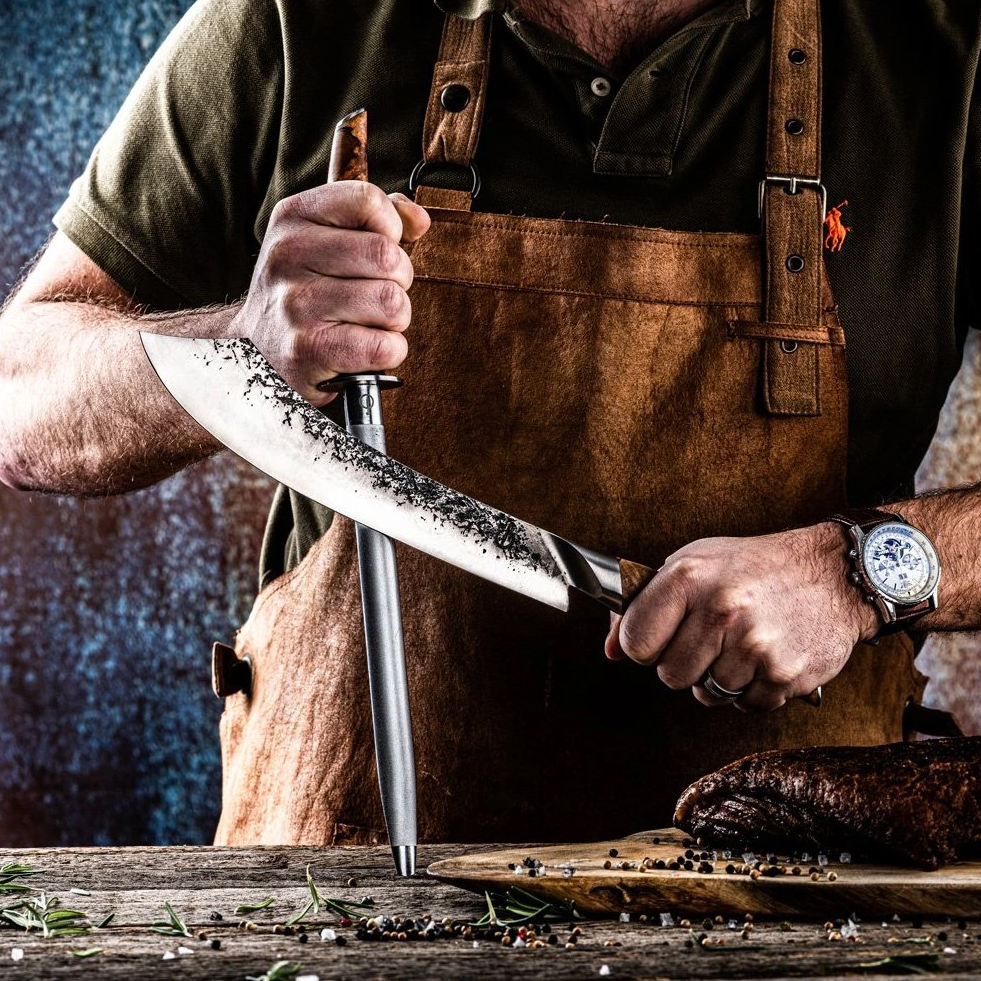
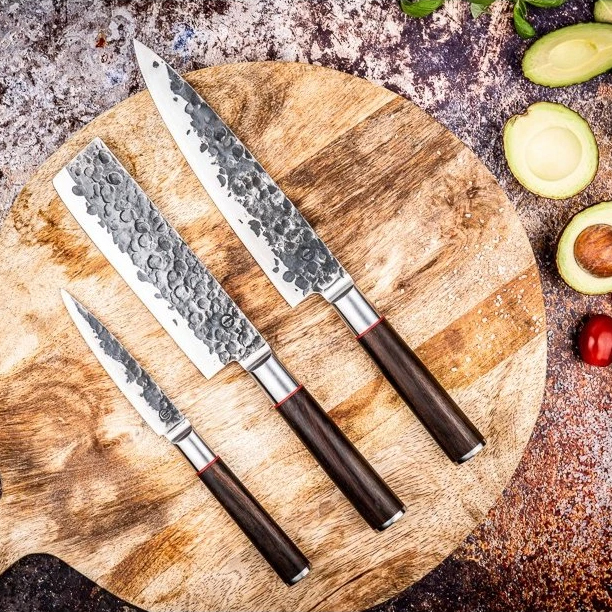
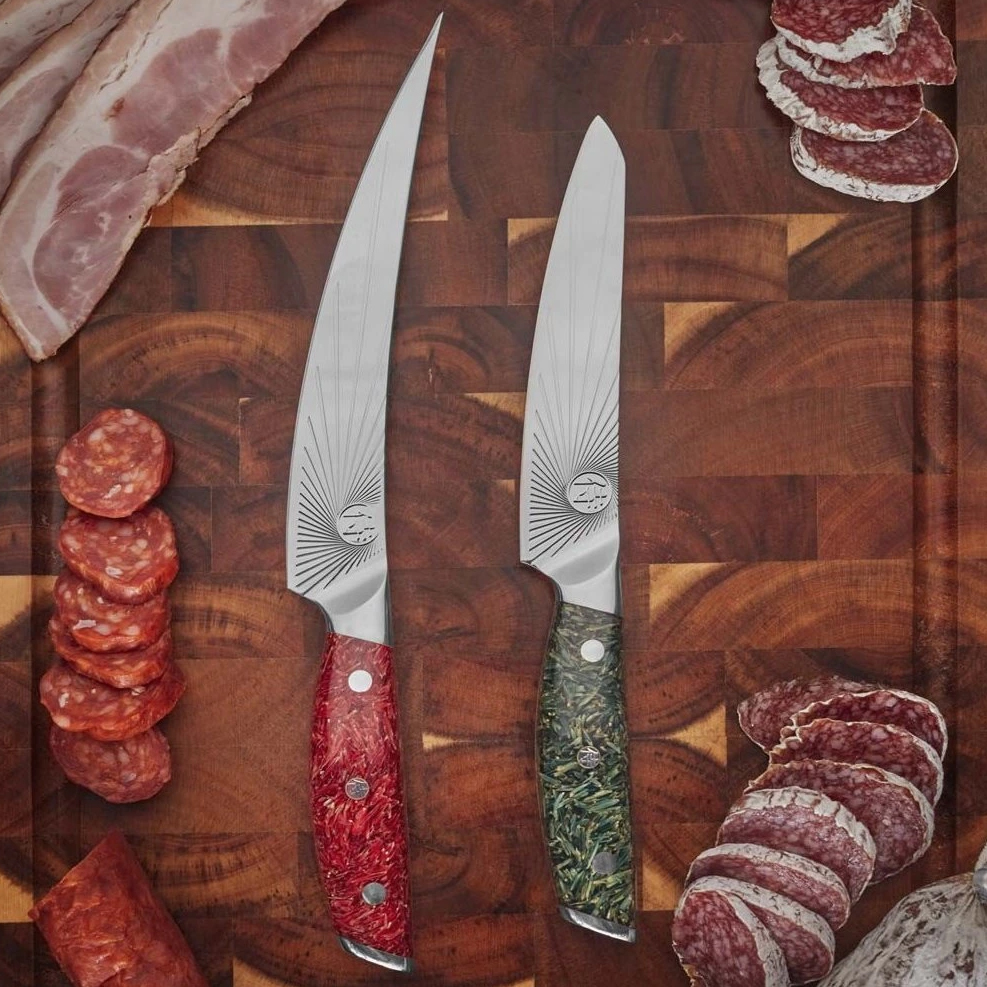
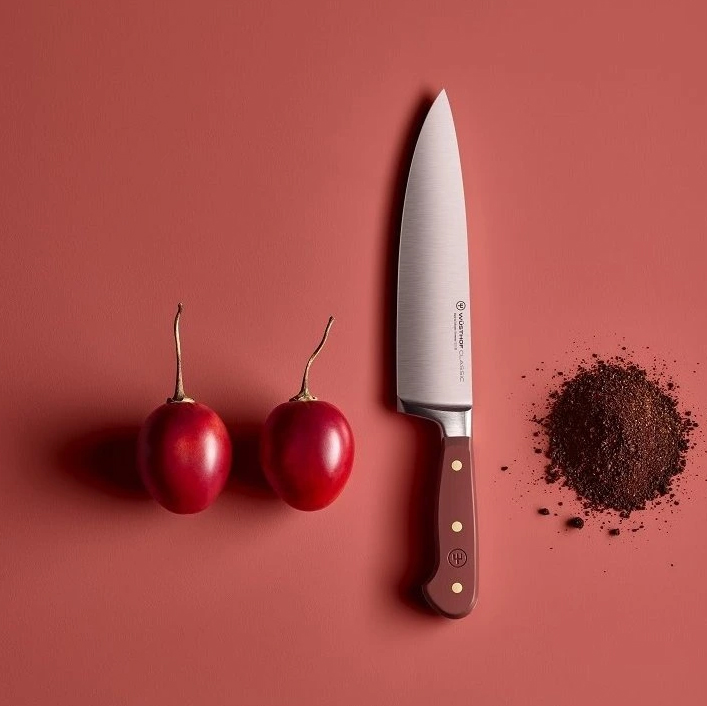
If you are looking for quality steel knives that combine craftsmanship tradition with modern design, take a look at knives from the German brand Wüsthofwhich is known for its precision and durability. Or the Dutch knives Forgedwhich have gained popularity thanks to their handmade, unique design and robust workmanship. And last but not least, Dellinger knives, inspired by traditional Japanese craftsmanship, are appreciated by anyone looking for performance and beauty in one.
FAQ
The most frequently asked question
How do steel knives differ from stainless steel knives?
Carbon steel knives are harder, sharper and easier to sharpen, but require regular care to prevent rust. Stainless steel knives are more resistant to corrosion and easier to maintain.
How to properly care for steel knives?
Steel knives should be hand washed after use, dried immediately and regularly coated with food grade oil to prevent rusting.
How often do steel knives need to be sharpened?
The frequency of sharpening depends on the use of the knife, but it is a good idea to periodically regrind carbon steel knives with a fine whetstone as their edge renews quickly.
Can a carbon steel knife rust?
Yes, carbon steel is prone to rusting if not properly maintained. It is important to dry the knife immediately after washing and to treat it regularly with oil.
What are the best brands of steel knives?
The most popular brands include Wüsthof, Forged and Dellinger, which offer top quality, precision cutting and long life.