
Saving time and energy – these are two main reasons to buy a pressure cooker. In reality, there are many more... So, if you want to cook quickly and always with excellent results, the pressure cooker was made just for you. We'll advise you on how to choose the right one and how to get the most out of it.
Pressure Cooker: Extra Utensil or a Must-Have for Quick Cooking?
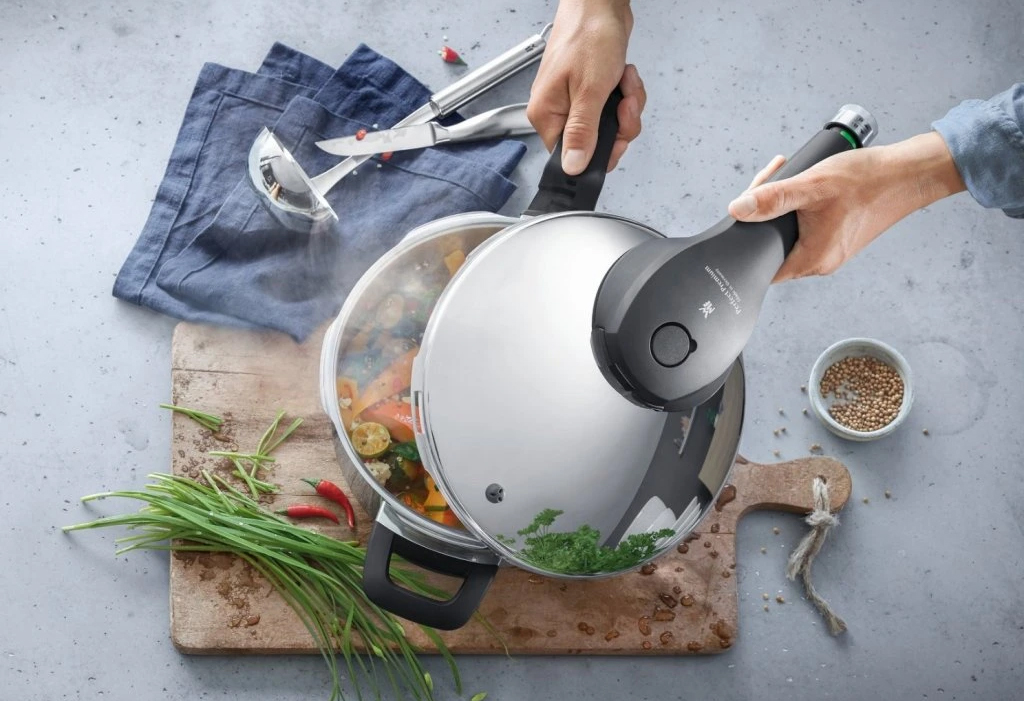
Popular pressure cookers
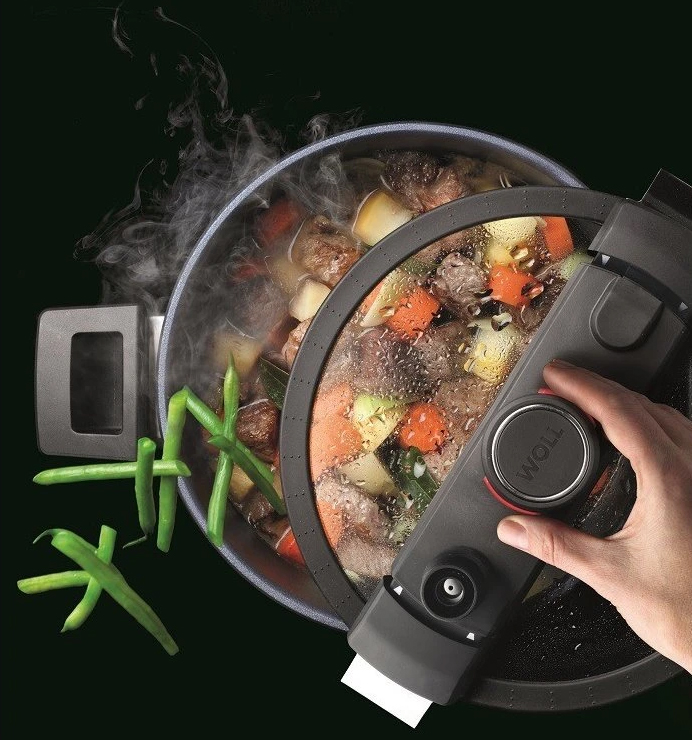
10 reasons:
Why buy a quality pressure cooker
- Significantly reduces preparation time even for more complex dishes – what normally takes an hour can be done in twenty minutes.
- Helps to preserve the full flavour and natural structure of ingredients, as cooking is shorter and gentler.
- Saves energy thanks to faster heating and more efficient heat transfer.
- Always guarantees a perfect result without the need for constant supervision – meat will be tender, and pulses evenly cooked.
- Allows you to prepare a main course, side dish and sauce in one pot – less washing up, less hassle.
- Can handle stocks, stews, pulses, vegetables, sauces, and even preserves or homemade pâtés.
- Retains more vitamins and minerals in food because the food is not exposed to unnecessarily long cooking times.
- Offers maximum safety thanks to modern ventilation systems and safety devices that monitor pressure and lid closure.
- Makes cooking larger quantities easier – ideal if you're cooking for more people or want to have food in stock for the next few days.
- Perfect for families with children where you need to cook quickly, efficiently and often in larger quantities.
What to consider when choosing a pressure cooker?
Volume
The size selection depends primarily on how many people you are cooking for:
- 3–4 litres for individuals or occasional cooking
- 5–6 litres for a typical family household
- 7 litres and above for larger families, stock enthusiasts or those who enjoy preserving
Material and base
Modern pressure cookers are typically made from high-quality stainless steel, which is durable, easy to clean and conducts heat excellently.
The base should be multi-layered, a so-called sandwich base – this ensures even heat distribution and prevents burning.
The base should be multi-layered, a so-called sandwich base – this ensures even heat distribution and prevents burning.
Closing, operation and safety
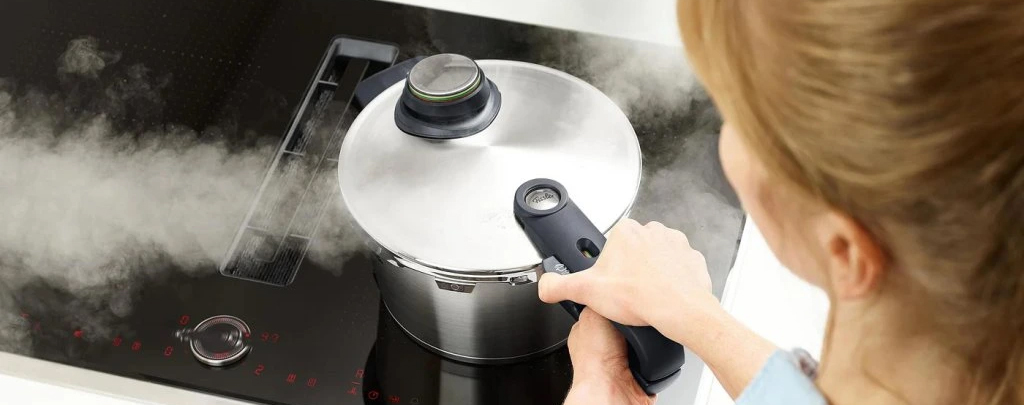
While older models close with screws, most modern pots seal easily with one hand.
With quality models, pressure control is smooth and precise, often with a choice of intensity depending on the type of dish.
Every quality pressure cooker has several safety valves, fuses and pressure indicators. The lid will not open until the pressure is completely released. Thanks to this, cooking is completely risk-free.
With quality models, pressure control is smooth and precise, often with a choice of intensity depending on the type of dish.
Every quality pressure cooker has several safety valves, fuses and pressure indicators. The lid will not open until the pressure is completely released. Thanks to this, cooking is completely risk-free.
Other features and accessories
- Option to set different pressure levels.
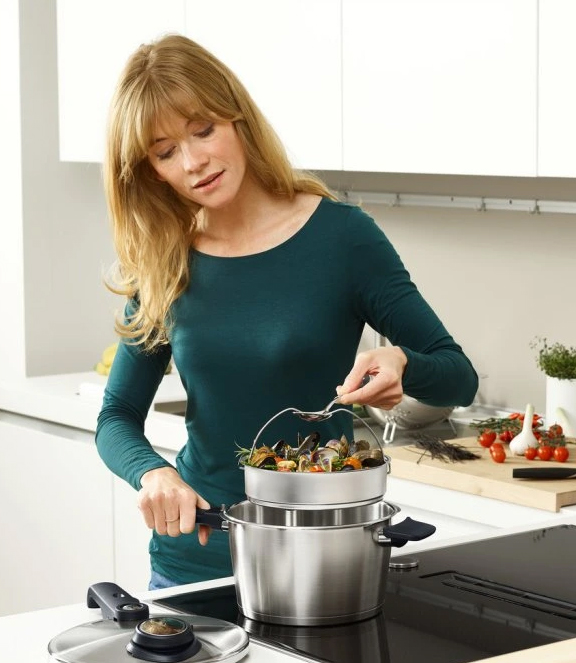
- Steaming basket for healthy vegetable or fish preparation.
- Second pot lid for regular cooking without pressure.
- Second cooking pot in the set for even wider use.
How to clean a pressure cooker?
To ensure your pressure cooker lasts for many years and always functions reliably, it is important to pay attention to its regular maintenance.
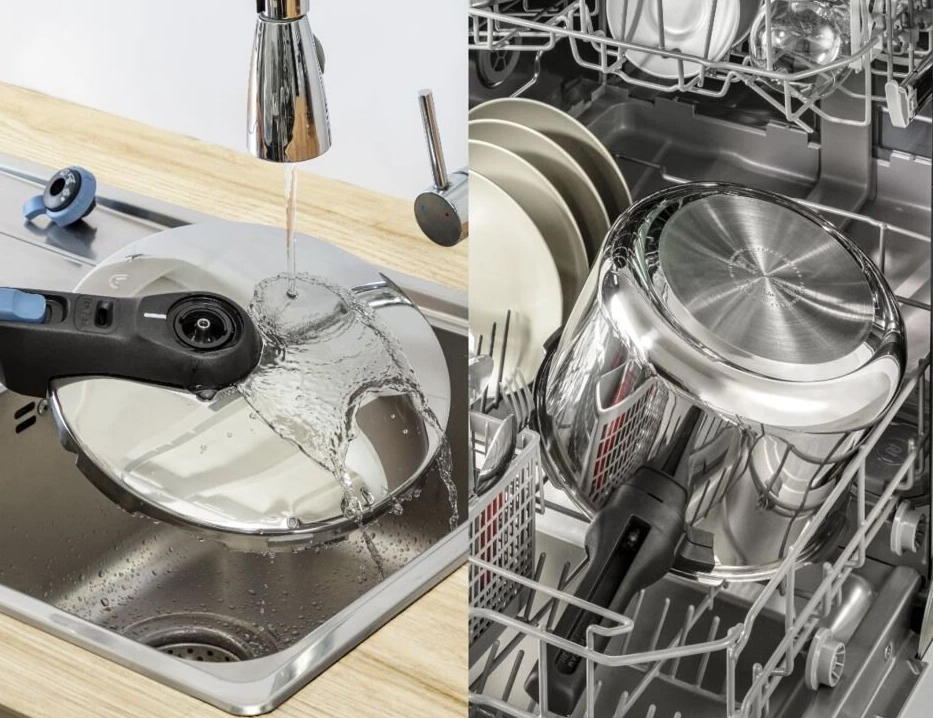
- Most models allow you to easily separate the lid from the seal, valve and other moving parts, which greatly simplifies cleaning.
- The cooking pot itself – i.e. the body without the lid – is usually dishwasher safe.
- However, it is better to wash the lid by hand, ideally after each use.
- Pay special attention to the safety valve: it should always be clean and unobstructed, with no food residue or grease, otherwise the pressure function may be restricted or completely blocked.
After washing, wipe the cooking pot dry with a quality cloth
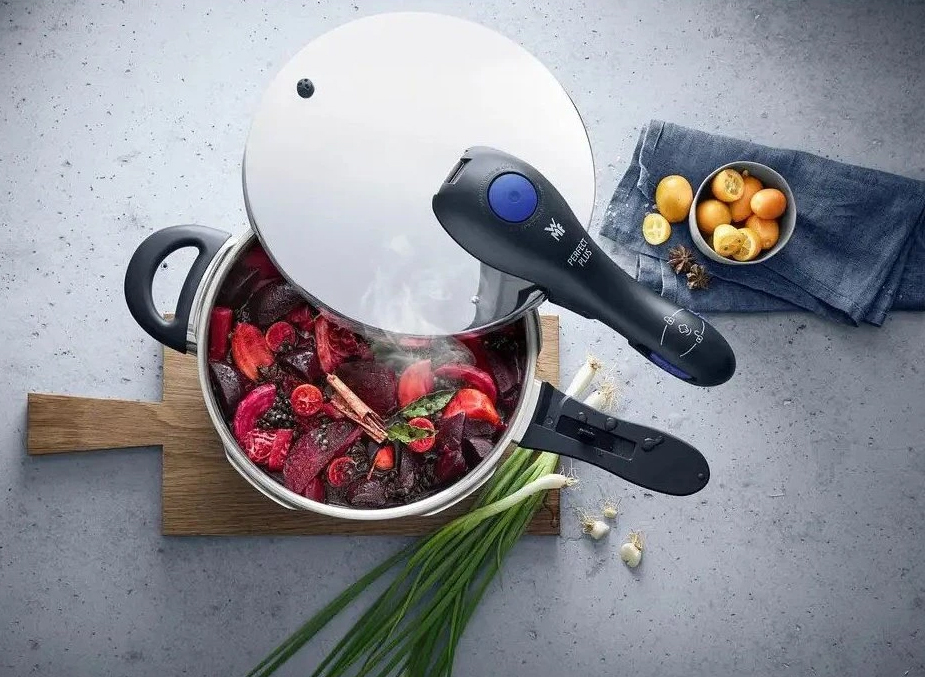
What all can you do in a pressure cooker?
Pressure cooker isn't just for meat or legumes. If you use it creatively, it will become a universal tool for everyday cooking:
- Restaurant-quality beef stock – ready in 45 minutes, full of flavour and with a clear result.
- Goulash that falls apart at the touch of a fork – the meat will be perfectly tender in just 30 minutes.
- Braised beef in wine, venison, pork cheeks – intense flavours and a silky smooth consistency without long cooking times.
- Legumes without pre-soaking – lentils, beans or chickpeas cook until tender in just a few minutes.
- Steamed vegetables or dumplings – using a steaming basket.
- Preserving fruit and vegetables – thanks to the high pressure and even temperature.
- Risotto without stirring, soups, chicken paprikash, or even homemade pâté.

Tips for proper cooking in a pressure cooker
- Fill the cooking pot to a maximum of two-thirds of its volume. For legumes, soups or foamy dishes, it is better to only fill it halfway – this will prevent the valve from clogging.
- Bring the cooking pot to a boil on a high heat first, then reduce the heat. Once the pressure has built up, there is no need to cook at full power.
- Set the correct pressure level according to the type of food. Most modern cooking pots allow you to select a lower pressure for delicate foods (e.g. vegetables or fish) and a higher pressure for meat and legumes.
- Never rush to open it after cooking. Allow the pressure to drop naturally (slow release), or use the quick-release valve – always follow the manufacturer's instructions.
- Before each use, check the cleanliness of the valve and seal. A blocked valve or damaged seal can affect safety and performance.
- Use less liquid than you would for conventional cooking. Thanks to the enclosed space, water barely evaporates – generally 250–500 ml is enough, depending on the recipe.
- Try cooking without fat. Thanks to the higher temperatures and pressure, some dishes can be prepared without oil – for example, vegetable dishes, pulses or soups.
- Let the dishes rest for a few minutes after cooking. The flavour develops beautifully and the food easily reaches the ideal consistency.
Pressure cooker not quite right? Choose a quality regular cooking pot:
Pressure cooker brands that will stand the test of time in any kitchen
When choosing a pressure cooker, it pays to reach for a brand that has a strong reputation and many years of experience in the field:
Fissler stands out for its robust construction, very precise pressure regulation and advanced safety system. It is an ideal choice for those who cook often and appreciate a technically sophisticated cooking pot for many years.
WMF combines reliable performance with elegant design and simple operation. One-hand closing, easy maintenance and clever details make it a great companion for everyday cooking.
WOLL focuses on pressure cooking with an emphasis on non-stick surfaces and easy cleaning. It will be appreciated by those looking for a comfortable and hygienic solution with minimal maintenance effort.
Tefal offers practical and affordable models that are ideal for beginners or everyday family cooking. Easy operation and functional features make it an accessible route to pressure cooking.
Fissler stands out for its robust construction, very precise pressure regulation and advanced safety system. It is an ideal choice for those who cook often and appreciate a technically sophisticated cooking pot for many years.
WMF combines reliable performance with elegant design and simple operation. One-hand closing, easy maintenance and clever details make it a great companion for everyday cooking.
WOLL focuses on pressure cooking with an emphasis on non-stick surfaces and easy cleaning. It will be appreciated by those looking for a comfortable and hygienic solution with minimal maintenance effort.
Tefal offers practical and affordable models that are ideal for beginners or everyday family cooking. Easy operation and functional features make it an accessible route to pressure cooking.
FAQ
Most frequently asked questions
Is cooking in a pressure cooker really safe?
Yes. Modern pressure cookers are equipped with several independent safety features – from safety valves to lid locking systems and pressure indicators. If you follow the manufacturer's basic instructions, cooking is completely safe.
What type of hob can I use a pressure cooker on?
Most high-quality pressure cookers are suitable for all types of hobs – gas, electric, ceramic and induction. However, always check the compatibility of the specific model.
What to do if the lid won't open after cooking?
Don't rush. The lid can be safely opened only after the pressure has been completely released – either by natural cooling or by using the quick release valve (depending on the model). If pressure remains inside, the cooking pot won't let you open it, which is a desirable safety feature.
How long does it take to cook meat, legumes or stock?
Approximately:
- Beef stock: 40–50 minutes
- Stewed beef: 25–30 minutes
- Pork: 20–25 minutes
- Beans or chickpeas (unsoaked): 25–30 minutes
- Lentils: 10 minutes
- Chicken: 15–20 minutes
(Times may vary depending on the size of the pieces and the specific model.)
Can I use a pressure cooker for canning?
Yes. Thanks to the evenly distributed high pressure, the pressure cooker is ideal for home canning – fruits, vegetables, meats or pâtés. Just be sure to observe the correct time and pressure level according to the specific recipe.