When choosing a non-stick pan, it's important to focus on the material, which affects not only the cooking itself, but also the maintenance and lifespan of the cookware.
Each type of surface has its own specific properties, which are suitable for different cooking styles. In addition, the world of non-stick surfaces is constantly growing, and it is sometimes difficult to navigate. In this article, we will therefore take a closer look at its classic representatives and original patented surfaces of renowned brands.
PTFE
If you're looking for a pan that's extremely easy to use and clean, PTFE (commonly known as teflon) won't let you down. Thanks to its non-stick properties, it allows you to prepare meals with a minimum amount of fat, which is great for healthier cooking. However, you need to be careful about overheating and use gentle utensils to avoid damaging the surface.
- Properties: Excellent non-stick properties, easy to clean, requires gentle handling.
- Advantages: Ideal for low-fat cooking, requires no oil, resistant to acids. Teflon pans are also generally very light and easy to handle.
- Disadvantages: Although non-stick surfaces have not been allowed to contain harmful PFOA since 2015, they are still sensitive to high temperatures, above 260 °C. At the same time, it is essential to use only gentle utensils to avoid damaging the surface.
Best non-stick frying pans according to customer reviews
Our tip
Read also

The truth about teflon
There are many myths and prejudices surrounding teflon. What is the truth about its health safety?
Titanium
Titanium pans are appreciated by those who want a combination of durability and non-stick properties. They are highly resistant to scratches and allow cooking without oil. Their higher price is offset by long life and excellent heat distribution. Despite expectations, titanium pans are typically about as heavy as steel ones, with the exception of the lightweight Woll Diamond Lite titanium pan range.
- Features: High durability, long life, often combined with other materials for better non-stick properties.
- Advantages: Requires no oil, scratch resistance, even heat distribution.
- Disadvantages: Higher price, slightly higher weight.
Highly durable titanium pans
Ceramics
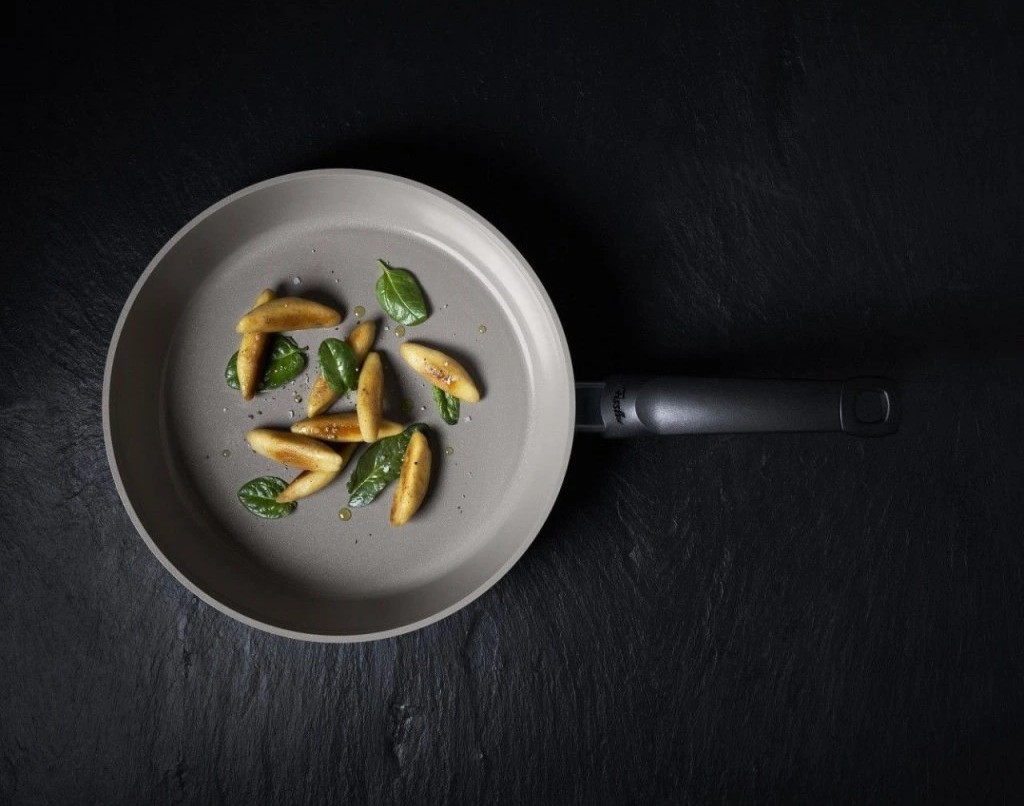
Ceramic pans have a smooth mineral surface that excels in easy maintenance and resistance to high temperatures. They are popular for their elegant appearance and simple use. However, they need to be handled with care – the surface is more prone to damage and may lose its non-stick properties faster than other types of pans.
- Properties: Mineral surface, smooth and firm to the touch.
- Advantages: High heat resistance, easy cleaning, attractive design.
- Disadvantages: Lower mechanical resistance, shorter lifespan of the non-stick effect.
Patented materials from manufacturers
Leading manufacturers are constantly developing new, patented materials and combinations thereof to achieve not only popular non-stick properties but also to guarantee the longest possible lifespan, durability and health safety. Some of them are worth a closer look:
Tefal
Natural Force
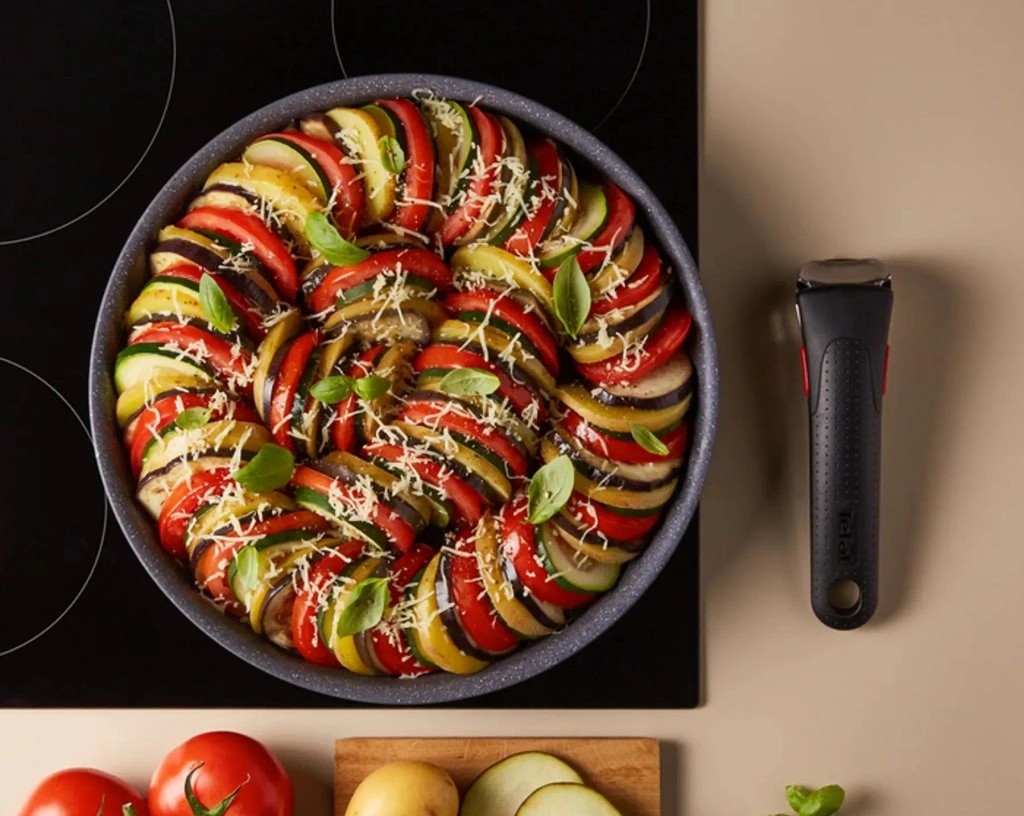
The Natural Force range from Tefal boasts a patented Mineralia+ surface that is non-stick and extremely durable, thanks to its enrichment with calcium silicate – a material that is natural and as hard as iron. It is extracted directly from the ground, and no chemicals are used in its production, making it perfectly safe for kitchen use.
Pans equipped with this technology are suitable for everyday cooking, allowing you to cook with minimal fat.
Tefal Pans - ideal for effortless cooking
Woll
Diamond Lite
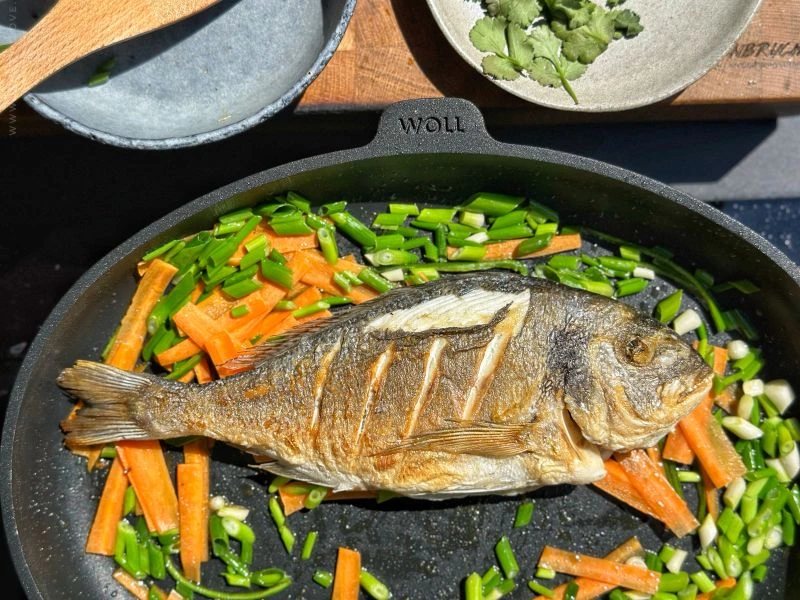
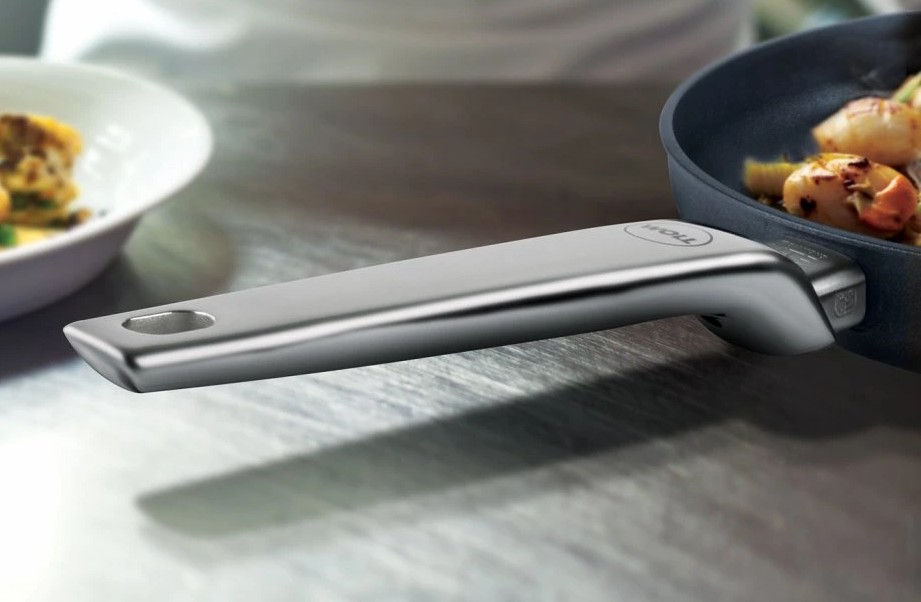
Woll uses Diamond Lite technology, which combines titanium with diamond particles. This surface ensures extreme scratch resistance and even heat distribution. The diamond structure also increases the durability of the pan and makes it easier to clean.Woll Diamond Lite Pans
Woll Pans - Highly Durable
De Buyer
Choc
Even the popular De Buyer is not far behind in the field of non-stick pans and offers the Choc range. These are professional pans with an ultra non-stick surface, made up of five layers of PTFE (not to be confused with PFOA or PFOS).
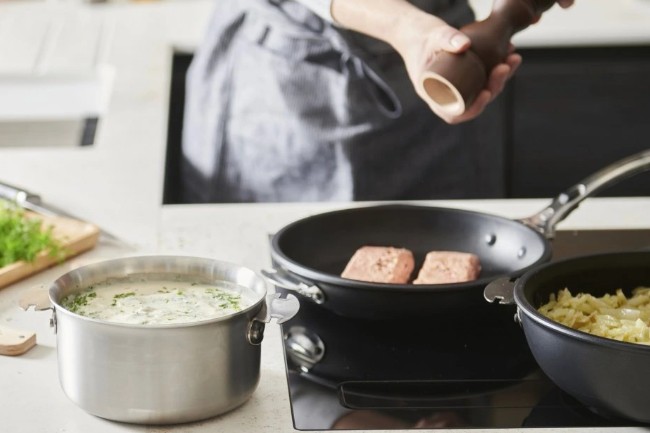
These pans are made of cast aluminium, which provides excellent thermal conductivity, and their non-stick surface ensures convenient preparation of delicate dishes such as fish or eggs.
Popular De Buyer Choc Pans
WMF
PermaDur and Profi Resist
The PermaDur surface from WMF is based on an innovative PTFE layer that is exceptionally resistant to mechanical damage. This technology allows for long-term use without losing its non-stick properties and is easy to maintain.
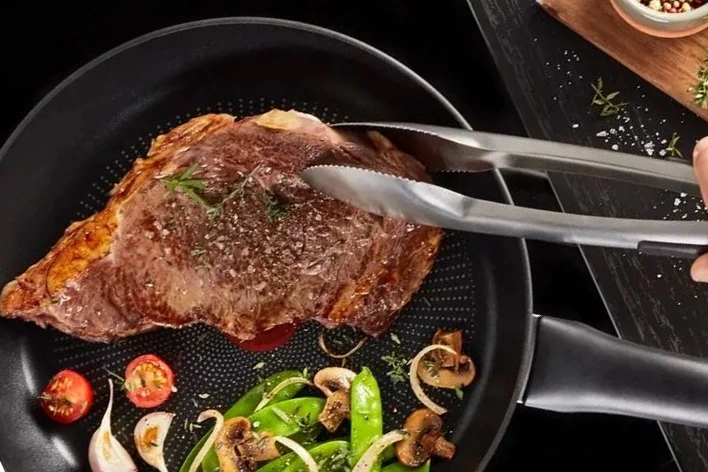
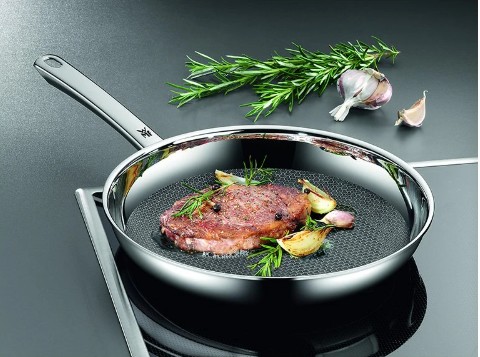
The Profi Resist range then takes the Permadur non-stick surface to the next level. The base of the pan is fitted with a stainless steel mesh in the shape of honeycomb filled with a non-stick layer, which is perfectly protected against mechanical damage by this structure, further extending the life of the pan.
High-quality WMF pans
So how do you choose the right non-stick pan?
When deciding, it is good to consider what type of dishes you prepare most often, how important durability and ease of maintenance are to you, as well as your preferences for healthy cooking.
Each material has its justification, whether you are looking for durability, respect for nature or ease of use. So choose the right pan mainly based on your needs.