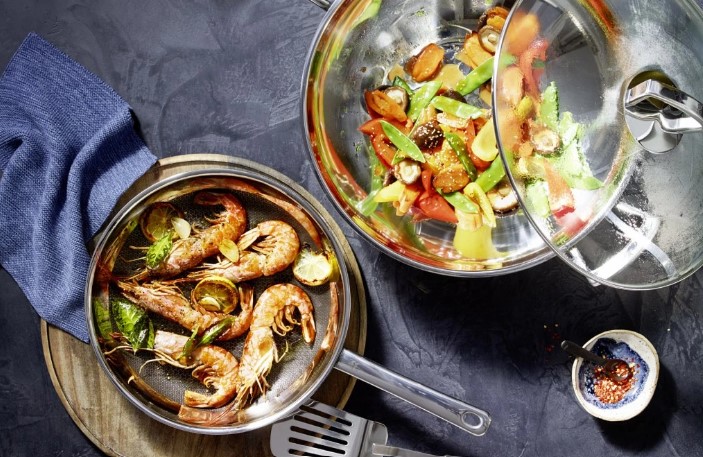
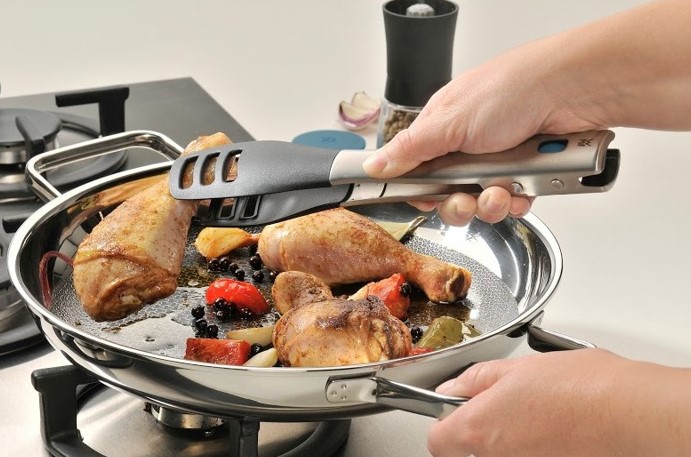
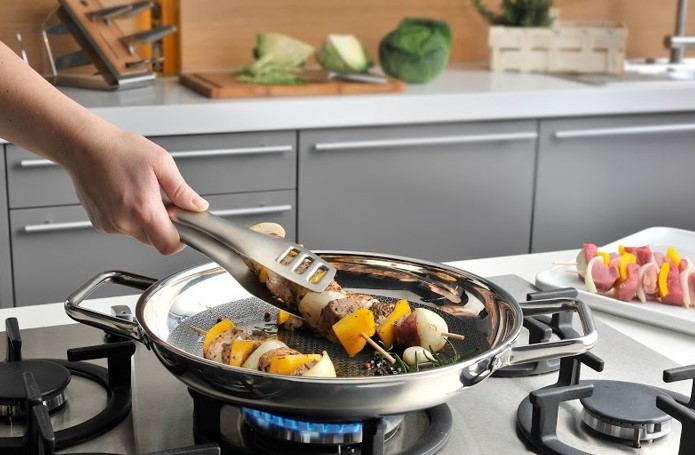
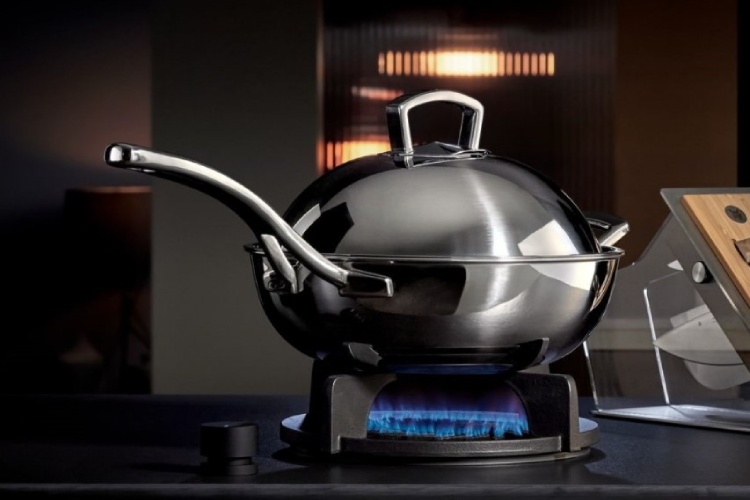
What dishes are best suited for stainless steel? Did you know that tomatoes and other acidic ingredients can damage cast iron or steel pans?
Whether you're preparing juicy steaks, crispy vegetables, or sauces, a stainless steel pan provides reliable performance. But what should you actually cook in a stainless steel pan, and why is it simply the best choice for some dishes?
Basic question: What are you cooking?
When you want to cook certain dishes, stainless steel is the obvious choice. For example, if you're embarking on Italian cuisine – preparing pasta with tomatoes or sauces with wine – it's the stainless steel pan that allows you to preserve all the flavours without reacting with acidic ingredients.
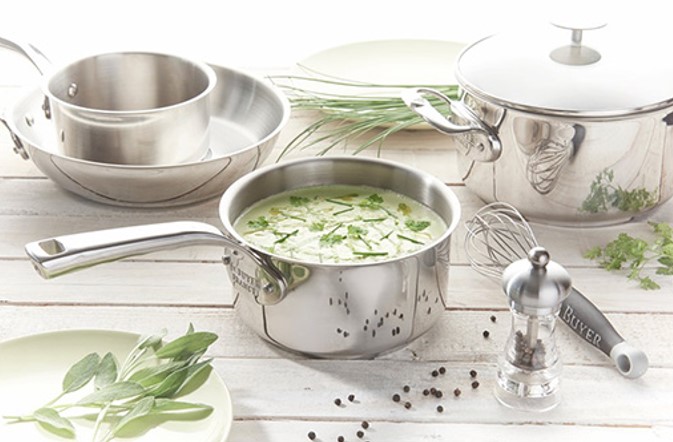
Popular stainless steel pans
So, when should you reach for a stainless steel pan?
Stainless steel is the perfect choice for dishes where you want to:
- To sear or sauté: Stainless steel pans can distribute heat effectively and evenly, making them ideal for preparing meat, fish and vegetables.
- Cooking sauces: If you're making sauces, stainless steel is the ideal choice. This pan doesn't react with acids in tomatoes and wines, which means all the flavours are preserved and the pan isn't damaged.
- Rich dishes: Stainless steel is great for sauces like Bolognese or a proper ragu.
How to cook properly with a stainless steel pan?
The right technique is key to success. Here are some tips to ensure comfortable cooking:
- Preheat the pan: Always start on a medium heat and give the pan time to heat evenly. Test it with a drop of water – if it "dances" on the surface, the pan is ready.
- Use enough fat: Fat creates a protective layer between the food and the pan.
- Don't put cold food on a hot pan: Let the meat reach room temperature before cooking. Cold ingredients can lower the pan's temperature and worsen sticking.
- Let the food sear: Don't try to turn the food too early. Wait until it releases from the surface on its own.
- Deglazing: After searing, add a little liquid (e.g. wine, cream, broth or water) to create a base for the sauce and make the pan easier to clean.
How to care for a stainless steel pan
For a long pan life and perfect functionality, follow these simple rules:
- Cleaning: Wash the pan with warm water and mild detergent. Avoid using scouring pads that could scratch the surface unattractively. Most stainless steel pans are also dishwasher safe.
- Burnt-on food: If something sticks, fill the pan with water and bring to a boil. Then gently remove the residue.
- Polishing: To maintain the shine, you can occasionally use a special stainless steel cleaner.
Our tip
Read also

Stainless Steel Pan – Elegant and Functional
The complete guide to stainless steel pans and tips for the right choice
This is usually caused by the pan not being preheated enough, or not using enough fat. It's also important not to panic and try to turn the food too early – after it's seared properly, you'll often find that it releases from the pan on its own.
Yes, but it requires a little more effort and the result may not always be worth it. For easier preparation of delicate foods, it is better to use a non-stick pan.
Most stainless steel pans are compatible with induction. However, check this with the specific product before purchasing.