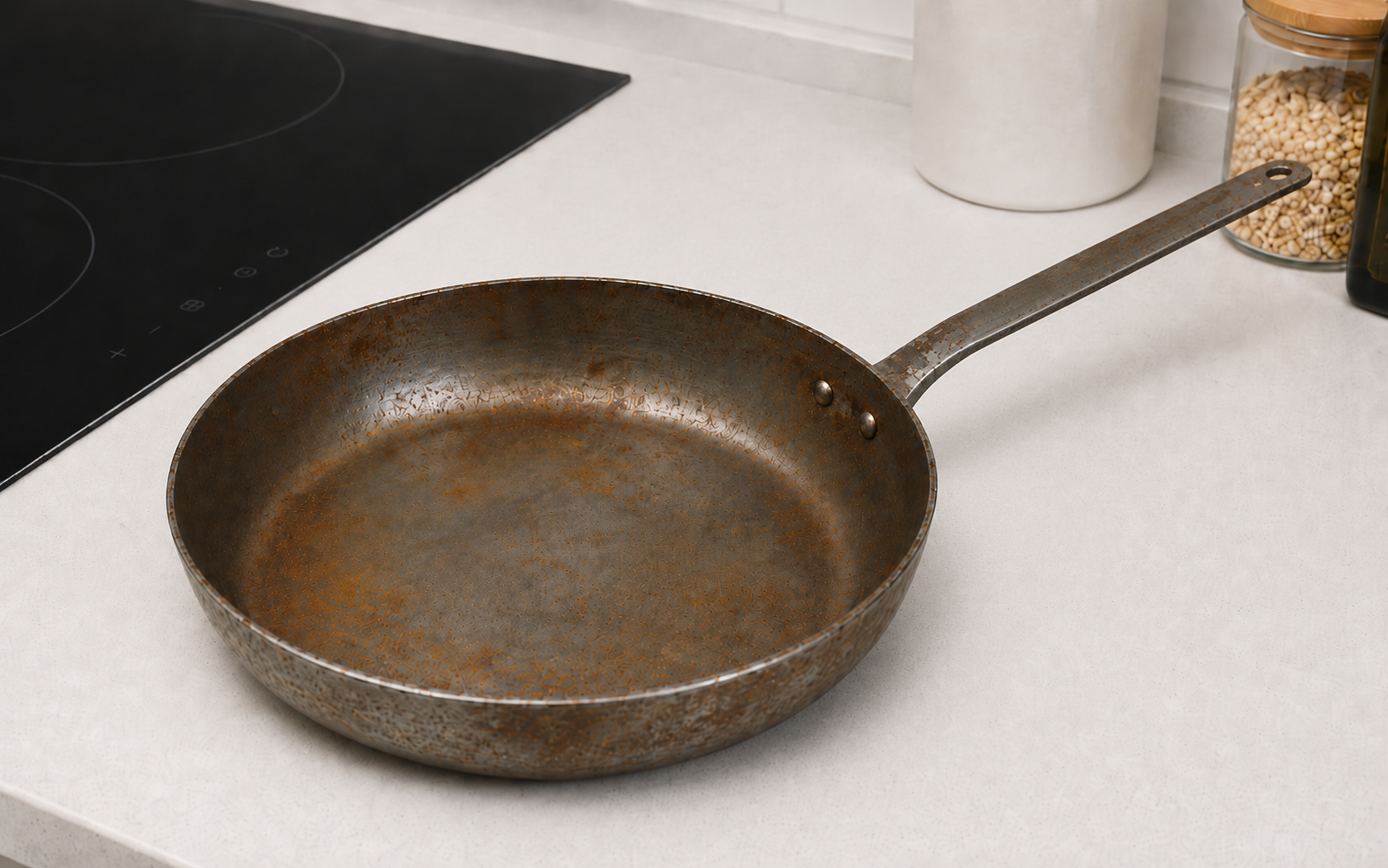
Rust is a natural reaction where iron reacts with moisture and oxygen. Rust can appear on steel if you forget to dry your pan thoroughly or it's left in a damp environment for an extended period. But the pan definitely doesn't belong in the bin.
How to Remove Rust from a Steel Pan
Are there signs of rust on your steel pan? Don't panic! Not even if you find a rusty steel pan at your grandmother's house. This treasure can be saved. We'll show you how in 5 easy steps.

The best steel pans according to our customers' ratings

If rust appears on a steel pan, there is no reason to panic. In most cases, it is a cosmetic flaw that can be easily removed.
Light rust
Remove minor surface rust mechanically until the surface is clean. Use:
- a sponge
- a fine scouring pad
- a brush
- or a bit of salt as a gentle abrasive

Heavier rust
For more significant rust, a more thorough approach is required:
- use a scouring pad or steel wool
- remove the rust down to the clean metal
- do not be afraid to clean the surface more aggressively – the pan will be re-seasoned afterwards
What to do after removing rust
After removing rust, the pan should be:
- rinsed
- dried thoroughly immediately
- re-seasoned to restore the protective layer and make the pan naturally non-stick again

You can season the pan in two ways:
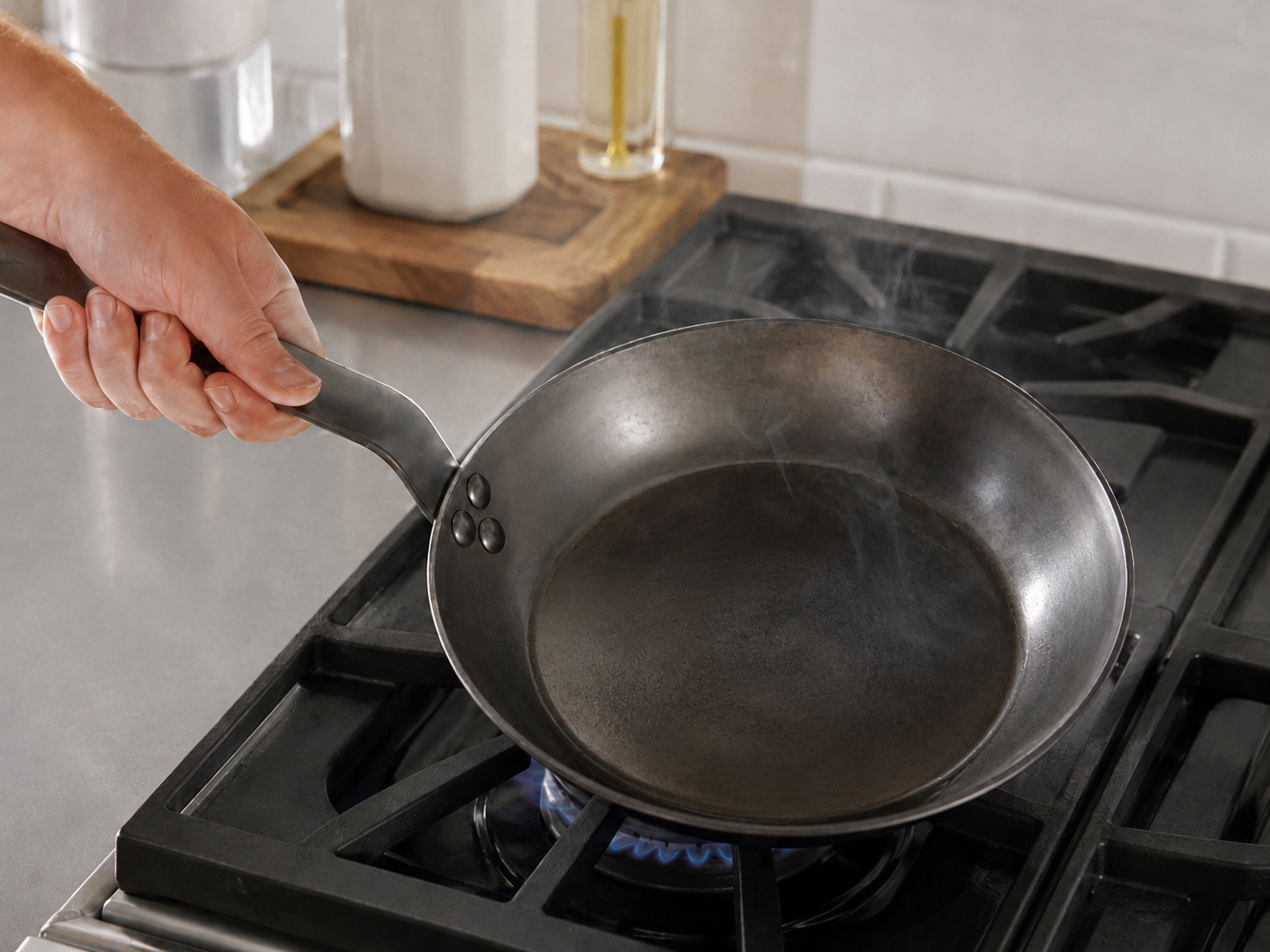
Seasoning on the hob
Place the pan on the stove, pour in a thin layer of oil and heat it to medium temperature (it is necessary to reach the smoke point of the oil - for example, rapeseed oil has it around 240°C). The oil will start to smoke, and this process will create the desired protective layer. Once the oil stops smoking, let the pan cool down and wipe away excess oil with a paper napkin.
Seasoning in the oven
Preheat the oven to at least 200°C and place the oiled pan inside. You can place a baking tray or foil underneath it in case any excess oil drips from the pan. Heat the pan in the oven for at least an hour and then let it cool down slowly in the oven.
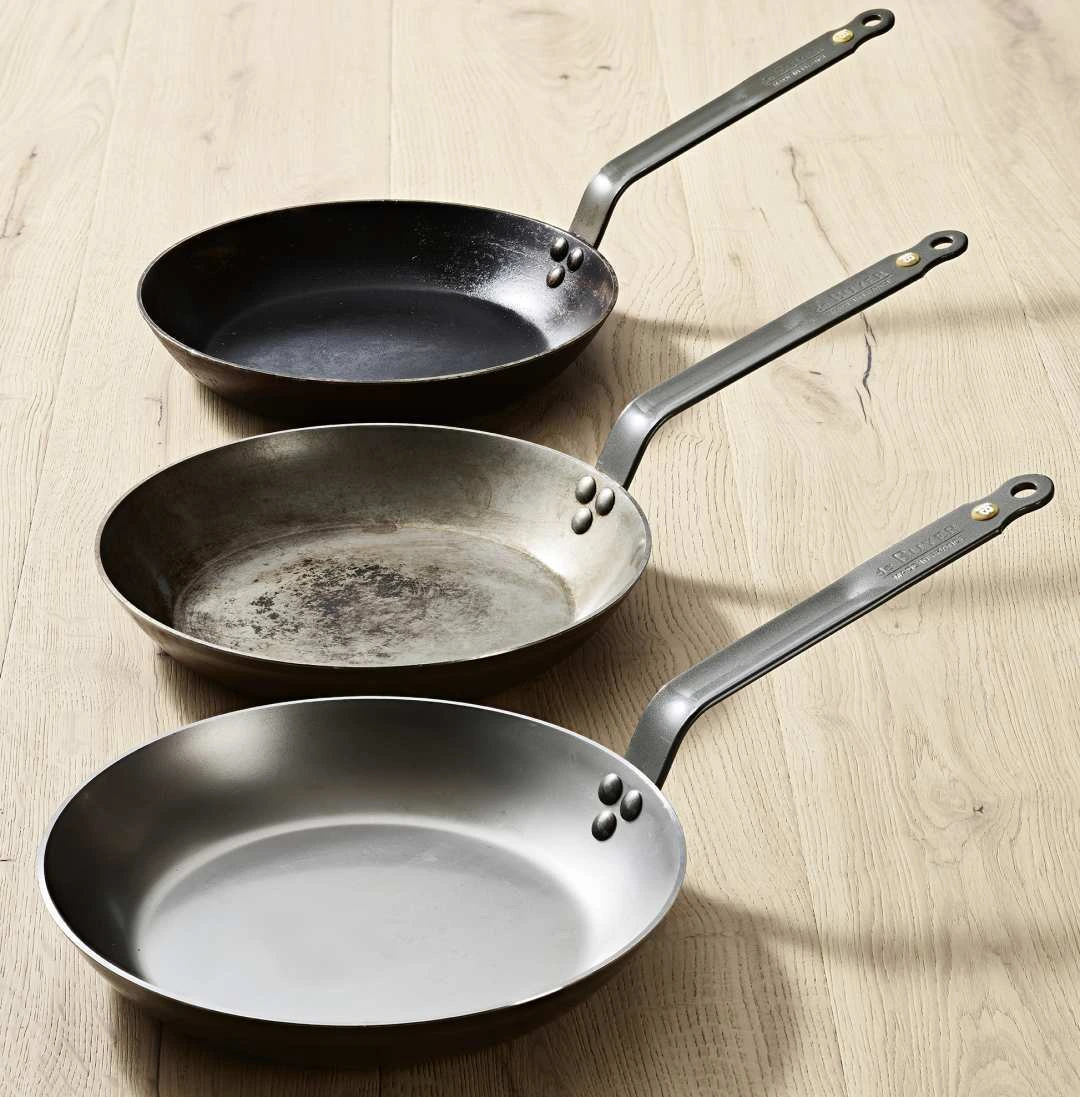
Notice that the pan has regained its typical dark colour and subtle sheen.
Repetition
If you want the pan's surface to be truly non-stick and durable, repeat the seasoning process. Each process will strengthen the pan's protective layer.

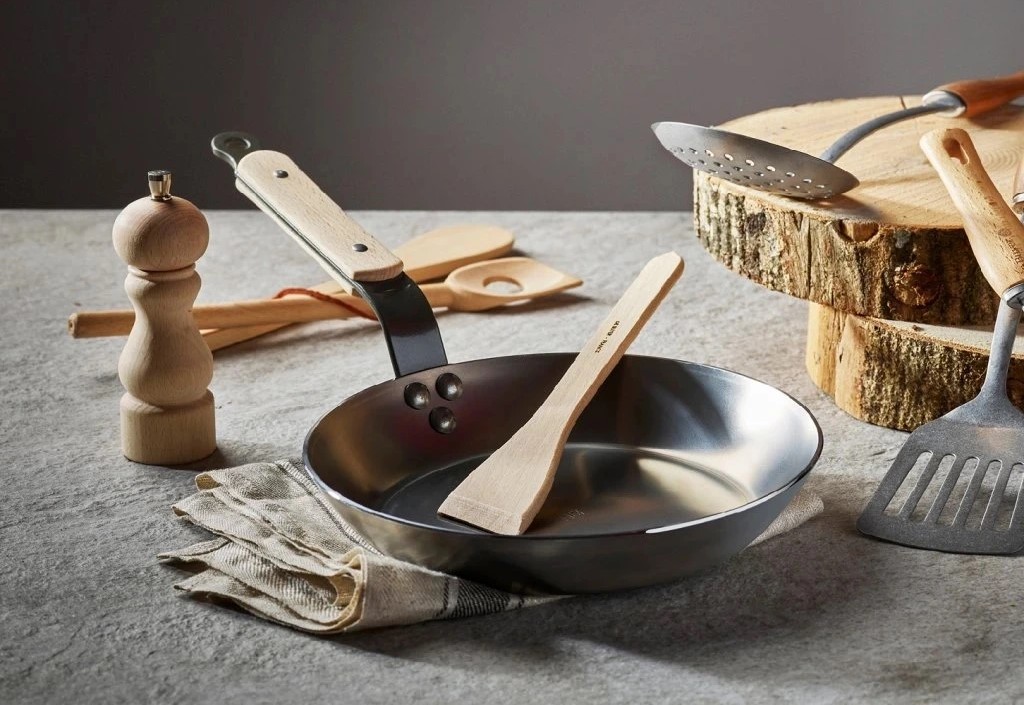
- Regular maintenance: If the pan is not heavily soiled, simply wipe it with a Paper napkin. Otherwise, wash the pan gently and dry it thoroughly, then we recommend lightly oiling the pan.
- Seasoning restoration: Once in a while, you can repeat the seasoning process to strengthen the surface's resistance.
- Beware of moisture: Never leave the pan wet or in a damp environment. Don't leave it to soak, and always dry it carefully as soon as possible.
- Washing: Wash the pan by hand – no dishwasher or harsh cleaning products.
And that's it! With this method, you don't have to worry about your favourite steel pan not being in great condition. So, the next time you spot rust on it, take a deep breath and remember – it can be saved!